After weeks of turmoil that rattled energy markets, oil prices traded around the $80 per barrel mark on Tuesday as the Middle East chaos showed signs of cooling down. However, benchmarks remained higher than Monday, as details of the peace deal remain unclear.
Current Oil Prices
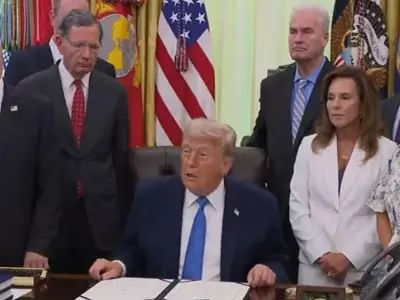
Around 7:15 am IST, West Texas Intermediate (WTI) crude was trading at $81.12 per barrel, up $0.37 or 0.46%, while Brent crude stood at $83.43 per barrel, up $0.26 or 0.31%. This follows a nearly 5% drop on Monday to the lowest close since March 4, after US President Donald Trump announced that a memorandum of understanding (MoU) had been signed to end the conflict.
Impact of the Conflict
The war had choked the Strait of Hormuz, a crucial shipping route that typically carries one-fifth of the world's oil supply, resulting in around 14 million barrels per day of output being shut in. Although oil prices remain above the roughly $70 per barrel seen before the war, they are lower than the more than $100 per barrel recorded just a few weeks ago. The decline has raised hopes that lower energy costs could ease pressure on households and businesses that have faced higher prices for essentials ranging from food and fuel to fertiliser due to the conflict with Iran.

Details of the Deal
Iran confirmed the deal, although it does not represent a final agreement on issues including Iran's nuclear programme. Negotiations on those matters are expected to continue over the next 60 days. Despite the optimism fueled by the announcement, the full details of the memorandum have not been made public, and a permanent truce has yet to be established. Early indications suggest the agreement could reopen the blockaded Strait of Hormuz and extend a ceasefire for 60 days, allowing negotiators to address complex issues such as the future of Iran's nuclear programme.
Official Statements
On Monday, Iranian President Masoud Pezeshkian described the US-Iran memorandum of understanding as an "important step" towards ending the fighting but said that a final agreement securing a lasting truce "has yet to take shape." A senior Iranian official said on Monday that, pending a final agreement, Iran would freeze its nuclear activity by refraining from further uranium enrichment or expanding its nuclear facilities.
Recovery Timeline
Even if the Strait of Hormuz reopens fully on Friday as expected, it is likely to take months for the energy sector to return to full operating capacity. Tankers will still require time to enter ports, load cargo, and complete voyages to Asian markets, which are the principal buyers of Gulf oil exported by Saudi Arabia, Iraq, Bahrain, the United Arab Emirates, Kuwait, and Oman.