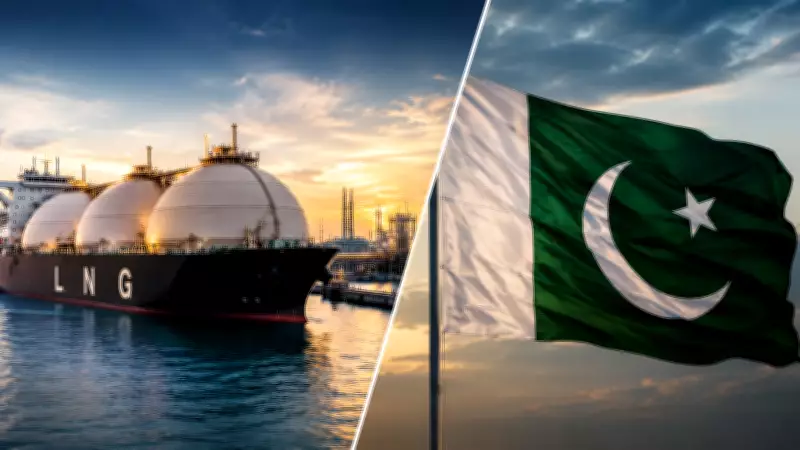
The escalating Middle East crisis has triggered global energy supply concerns, with many nations scrambling to secure fuel reserves to mitigate potential disruptions. However, Pakistan is adopting a high-risk strategy by refraining from urgent LNG purchases, betting that the Strait of Hormuz disruptions will ease soon and that cheaper shipments from Qatar will arrive on time.
Pakistan's LNG Gamble
According to Bloomberg, state-run Pakistan LNG Ltd did not award an emergency tender for two LNG cargoes required for May delivery, which closed on Thursday, as per traders familiar with the matter. The decision rests on the assumption that tensions between the US and Iran are beginning to cool and that Qatar will soon deliver two contracted LNG shipments to Pakistan.
Shipping data compiled by the agency indicates that Pakistan received just one LNG shipment since early March, a sharp drop compared to last year when it imported about nine cargoes each month on average. Under its long-term agreement, LNG supplied by Qatar costs roughly half as much as cargoes sourced from the spot market.

Potential Consequences
Avoiding spot purchases may deepen Pakistan’s energy challenges. The country is already grappling with a gas deficit that has contributed to widespread electricity outages. The energy situation is unfolding amid ongoing instability in the Strait of Hormuz, which has been heavily disrupted since fighting began in late February. The route is a key global energy corridor, handling around one-fifth of the world’s LNG, along with large volumes of oil and petroleum products.
Strait of Hormuz Tensions
Although a ceasefire has been in place since early April, fresh clashes between the US and Iran have raised doubts over whether peace will hold. Late last month, according to Bloomberg, Pakistan was forced to return to the spot market for LNG after more than two years, as regional conflict disrupted contracted supplies. The latest tender had sought deliveries for May 12–14 and May 24–26. Despite the tensions, some shipments have still made it through the Strait of Hormuz, including a diesel tanker last week.
Diplomatic Efforts
Diplomatic contacts have continued alongside the energy concerns. Prime Minister Shehbaz Sharif held a call with Qatar’s Prime Minister Sheikh Mohammed bin Abdulrahman Al Thani on May 7, during which they discussed the conflict and reaffirmed their commitment to peace efforts, according to a post on X.
Economic Outlook
Meanwhile, concerns are mounting over the economic outlook. A report cited by Dawn warns that Pakistan’s economy could remain under pressure, with inflation expected to stay in double digits if global oil prices continue to rise amid the ongoing Middle East tensions. Topline Securities Ltd, in its latest “Pakistan Strategy” report, described the situation as “prolonged and evolving”, saying any improvement depends on a swift and peaceful resolution to the conflict.
The brokerage estimates inflation could average between 9 and 10% over the next year, with fourth-quarter FY26 figures potentially rising above 11% under current conditions. The projections are based on oil prices around $100 per barrel, with every $10 increase adding about 50 basis points to inflation. If crude reaches $120 per barrel, inflation could touch around 11% annually, potentially forcing further rate hikes by the State Bank of Pakistan.
Global Energy Strain
Global energy supplies have continued to trade under pressure ever since the Middle East crisis erupted. More than two months ago, on February 28, US and Israel launched joint strikes on Iran, after which Tehran retaliated by tightening its noose on the crucial Strait of Hormuz, draining global supplies. Pakistan’s decision to skip spot purchases may exacerbate its energy woes, but the government is banking on a swift de-escalation and reliable Qatari shipments to tide over the crisis.