

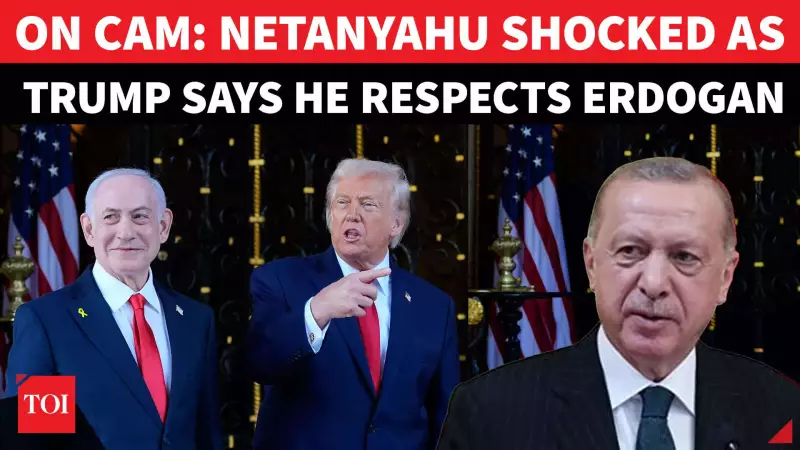
In a diplomatic move that has sent shockwaves through international relations, former US President Donald Trump openly praised Turkish leader Recep Tayyip Erdogan, leaving Israeli Prime Minister Benjamin Netanyahu visibly stunned. The comments, made on December 30, 2025, have immediately raised urgent questions about the future of US positioning and alliances in the volatile Middle East.
The Bombshell Comments That Changed the Game
During a public interaction, Donald Trump described the Turkish President as a "good friend" and labeled him "very smart." The real shocker, however, came when Trump asserted that Israeli PM Benjamin Netanyahu, often referred to as 'Bibi,' holds a deep "respect" for Erdogan. This public endorsement starkly contrasts with the long-standing and publicly tense relationship between Israel and Turkey, marked by differing stances on Palestine, regional security, and energy resources.
The incident, reported by TOI.in, highlights Trump's unconventional approach to statecraft, where personal rapport between leaders is often placed above traditional diplomatic protocols. Observers noted that Netanyahu's reaction was one of clear surprise, as the US-Israel relationship is typically presented as unshakeable, especially under Republican administrations.

Immediate Fallout and Regional Ramifications
The immediate consequence of Trump's statement is a significant recalibration of perceived alliances. For years, Turkey under Erdogan has positioned itself at odds with Israel on several key issues. By publicly aligning himself with Erdogan and dragging Netanyahu's perceived "respect" into the spotlight, Trump has potentially weakened Israel's diplomatic hand ahead of critical geopolitical negotiations concerning Iran, Syria, and regional security pacts.
Analysts suggest this move could be part of a broader strategy by Trump to reshape alliances based on perceived strongman relationships, rather than historical or ideological ties. This creates a layer of uncertainty for traditional US partners who rely on predictable support. The comments have undoubtedly injected fresh complexity into the already tangled web of Middle Eastern diplomacy, where every public word is dissected for hidden meaning and future intent.
What This Means for Future US Policy
The episode raises profound questions about the consistency and direction of US foreign policy in the region. If such a approach were to be formalized, it could signal a shift towards a more transactional and personality-driven foreign policy, where long-standing partnerships are subject to the personal dynamics between leaders. This has direct implications for:
- Israel's Security Calculations: Netanyahu may feel pressured to reassess his diplomatic strategy if US support is perceived as conditional or diffused.
- Turkey's Regional Ambitions: Erdogan gains indirect validation and a stronger bargaining position, seeing his relationship with a key US figure highlighted.
- Arab States: Gulf nations watching this dynamic unfold may also seek to strengthen bilateral ties with the US outside of traditional frameworks.
Ultimately, this single exchange underscores the fragile nature of diplomatic ties in the modern era, where a few words from a influential global figure can force nations to reconsider their strategic positions overnight. The full impact of Trump's 'respect' bombshell will unfold in the coming weeks as regional players adjust their tactics in response to this unexpected diplomatic pivot.






