

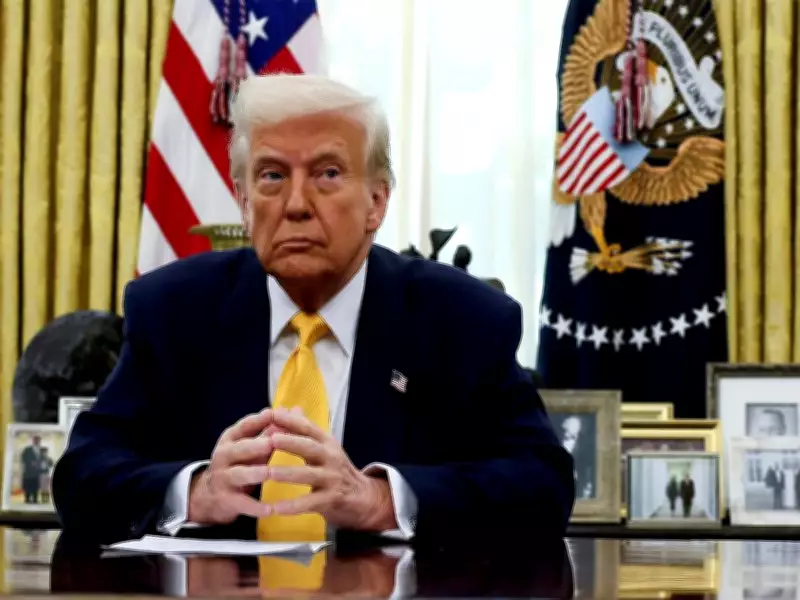
Trump Alleges Iran Initiated Contact Following US Naval Blockade
Former United States President Donald Trump has made a striking claim regarding Iran's diplomatic posture in the wake of heightened military actions. According to Trump, Iranian officials reached out to him after the United States imposed a significant naval blockade, indicating a strong willingness to negotiate. "They'd like to make a deal very badly," Trump stated, emphasizing Iran's perceived eagerness to engage in discussions amidst escalating regional tensions.
Context of the US Naval Blockade and Regional Dynamics
The assertion comes against the backdrop of a recent US naval blockade, a move that has intensified pressure on Iran and stirred concerns over stability in the Middle East. This blockade, part of broader strategic efforts, aims to curb Iran's influence and activities in the region, particularly in maritime domains. Trump's comments suggest that such measures may be prompting Iran to reconsider its stance and seek diplomatic avenues to alleviate the pressure.
Trump elaborated on the situation, noting, "Iran is feeling the heat from our actions, and they're looking for a way out. They contacted me because they know I understand how to make deals that work for America." This statement underscores his self-proclaimed expertise in negotiation and hints at potential backchannel communications that could shape future US-Iran relations.

Implications for US Foreign Policy and International Relations
Trump's claim has sparked discussions among analysts and policymakers about the current state of US-Iran diplomacy and the effectiveness of coercive measures like naval blockades. If verified, Iran's outreach could signal a shift in its approach, possibly opening doors for renewed talks or agreements. However, skepticism remains, as such claims are often part of political narratives and may require confirmation from official sources.
Key points to consider include:
- The timing of Iran's alleged contact, following the imposition of the naval blockade, suggests a direct response to US military actions.
- Trump's role as a former president raises questions about the legitimacy and channels of such communications, given he is no longer in office.
- This development could influence ongoing US foreign policy strategies under the current administration, potentially affecting decisions related to sanctions, diplomacy, and regional alliances.
Broader Impact on Middle East Stability and Global Perceptions
The situation highlights the volatile nature of US-Iran relations and their broader impact on Middle East stability. A potential deal, as hinted by Trump, could lead to reduced tensions, but it also risks complicating existing diplomatic efforts. Global observers are closely monitoring these developments, as they could reshape geopolitical dynamics and influence international trade and security in the region.
In summary, Trump's assertion that Iran is keen on making a deal after the US naval blockade adds a new layer to the complex relationship between the two nations. While the claim awaits verification, it underscores the ongoing interplay of military pressure and diplomacy in shaping international affairs. As events unfold, the world watches to see if this leads to tangible negotiations or remains a rhetorical point in the political landscape.






