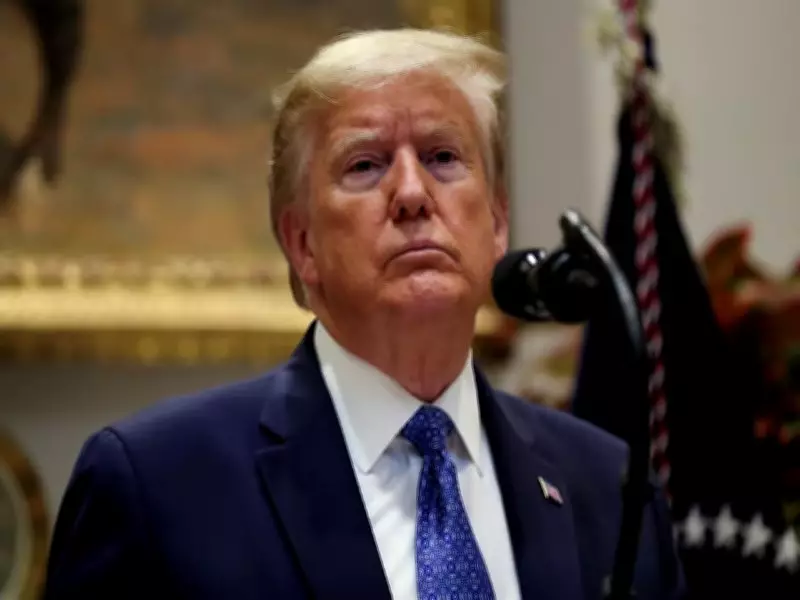
US President Donald Trump has issued a stark warning to Iran, stating that any attempt to block the Strait of Hormuz would be met with overwhelming military force, and that Tehran would face devastating consequences. In an interview with Fox News on Sunday, Trump declared, "You close it, and you won't have a country. You won't even make it back to your country."
US Threatens Direct Intervention and Tolls
Trump revealed that he held talks with Iranian officials overnight on Saturday, during which he delivered the stern warning. The US President suggested that Washington could assume direct operational control of the vital shipping lane if necessary, and even levy transit fees on oil shipments. "We may take over the Strait if we have to. I'll blow the country," he said. He added that if diplomatic discussions stall, the US could enforce its own maritime tariffs, arguing that the fees would compensate for security operations conducted by the US military, which he described as acting as a "Guardian Angel" for nations across West Asia.
Nuclear Rights at Center of Dispute
The sharp remarks followed statements from Iranian President Masoud Pezeshkian, who reiterated that Tehran would not relinquish its right to enrich uranium, asserting that the United States "will have no choice but to accept this right." Reacting to Pezeshkian's stance, Trump cautioned Tehran against confrontational rhetoric, telling Fox News: "He better watch his mouth. He better shape up, or we will take over the rest of the country." The US President further noted that Washington maintains multiple strategic alternatives should Iran fail to deliver substantive commitments towards a comprehensive pact.

Diplomatic Talks Resume in Switzerland
The latest developments emerged as American and Iranian diplomats engaged in high-level deliberations in Switzerland on Sunday, marking their first face-to-face negotiations in more than 10 weeks. Tehran's nuclear development programme and regional stabilisation efforts to contain the conflict involving Israel and Hezbollah in Lebanon remain central to the diplomatic agenda. US Vice President JD Vance, who is heading the American delegation, stated that Washington is prepared to "fundamentally transform" its bilateral dynamic with Tehran, provided Iran is willing to "give up being a driver of regional instability." Vance further affirmed that President Trump remains dedicated to securing a "full regional ceasefire," noting that the United States is achieving measurable progress in diplomatic initiatives aimed at de-escalating hostilities between Israel and Hezbollah in Lebanon.
Oil Shipments Continue Amid Tensions
Touching upon global energy markets, Trump stated that 19 million barrels of crude oil had successfully moved through the Persian Gulf on Saturday, following a Memorandum of Understanding reached with Iran. The Strait of Hormuz is a strategically critical chokepoint through which about 20% of the world's oil passes, making any threat of closure a major concern for global energy security.