President Donald Trump has issued a stark warning to Iran, stating that if Tehran does not agree to a nuclear deal, the United States will take military action to ensure Iran never obtains a nuclear weapon. The ultimatum comes amid ongoing peace talks between the two nations, which have been stalled over disagreements on uranium enrichment levels and sanctions relief.
Trump's Ultimatum
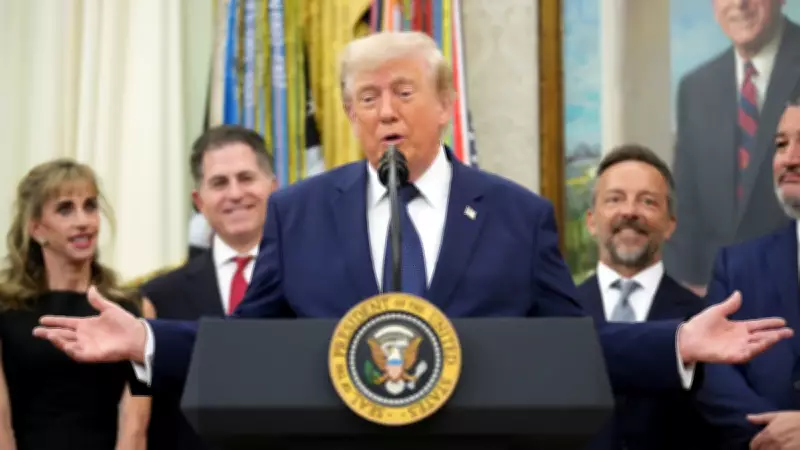
Speaking to reporters at the White House on Tuesday, Trump declared, "Either they make a deal, or we will finish the job. Iran will never have a nuclear weapon." The president emphasized that the US is prepared to use military force if diplomatic efforts fail, though he expressed hope that negotiations would succeed.
Trump's remarks follow a series of indirect talks mediated by European and Gulf diplomats. The discussions aim to revive the 2015 Joint Comprehensive Plan of Action (JCPOA), which the US withdrew from in 2018. Iran has since exceeded enrichment limits, now possessing 60% enriched uranium, close to weapons-grade.

Iran's Response
Iranian Foreign Minister Hossein Amir-Abdollahian responded cautiously, stating that Tehran remains committed to a diplomatic solution but will not accept threats. "If the US wants negotiations, it must lift sanctions and show goodwill," he said. Iran has demanded verification of sanctions relief before returning to full compliance.
According to the International Atomic Energy Agency (IAEA), Iran's stockpile of enriched uranium is now 18 times the limit set by the JCPOA. The IAEA chief Rafael Grossi warned that time is running out for a diplomatic solution, urging both sides to resume talks immediately.
Global Reactions
European Union foreign policy chief Josep Borrell expressed concern over Trump's ultimatum, calling for restraint. "We urge all parties to avoid escalation and return to the negotiating table," he said. Russia and China also criticized the US stance, with Beijing accusing Washington of "maximum pressure" tactics that undermine regional stability.
In Israel, Prime Minister Naftali Bennett welcomed Trump's tough stance, saying, "Israel supports any effort that prevents Iran from acquiring nuclear weapons." However, Gulf states like Saudi Arabia and the UAE have called for a peaceful resolution, fearing a military conflict could disrupt oil markets and regional security.
What's at Stake?
The standoff has significant implications for global security and oil prices. Analysts warn that a US military strike could trigger a wider war, drawing in Hezbollah and other Iranian proxies. Meanwhile, Iran has threatened to block the Strait of Hormuz, a vital oil shipping route, if attacked.
According to the US Energy Information Administration, nearly 20% of global oil passes through the Strait of Hormuz. Any disruption could send crude prices above $150 per barrel, worsening inflation worldwide. The Biden administration had previously tried to revive the nuclear deal but failed due to Iran's uncompromising stance.
Next Steps
Diplomatic sources indicate that the next round of talks is scheduled for late July in Vienna. However, Trump's ultimatum may harden Iran's position. The US has also deployed additional naval assets to the Persian Gulf as a show of force.
Former US officials argue that Trump's approach risks repeating the mistakes of his first term, when the maximum pressure campaign failed to bring Iran to the table. "This is a high-stakes gamble," said Richard Nephew, a former State Department official. "If it fails, we could be looking at another war in the Middle East."
For now, the world watches as the clock ticks on diplomacy, with the threat of military action looming large.