

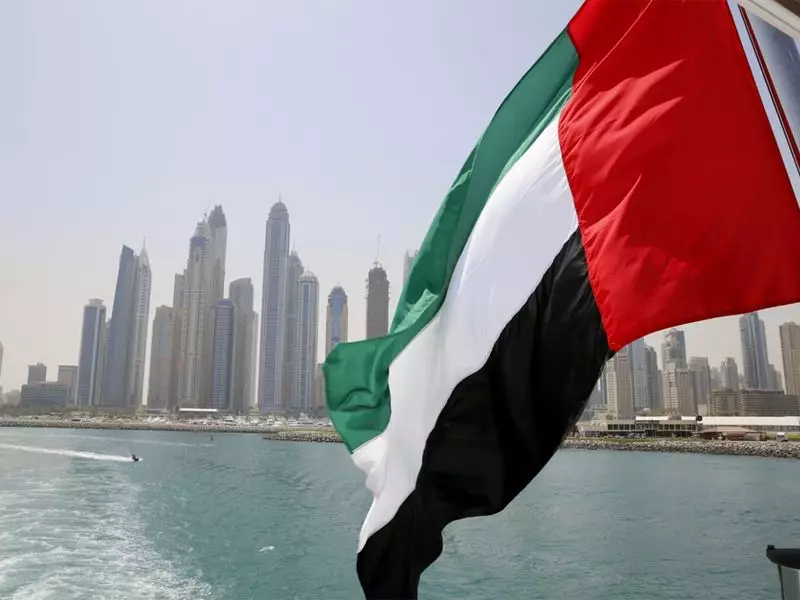
The United Arab Emirates is celebrating a significant milestone this year, marking its 54th Eid Al Etihad, or National Day. The occasion is not just a reflection on the nation's remarkable unification journey since 1971, but also a powerful testament to its evolved identity as a forward-thinking global leader. Today, the UAE stands tall on the world stage, recognized not only for its economic prowess but for its pioneering vision in critical future-facing domains like sustainability and artificial intelligence.
From Historic Unification to a Modern Vision
The foundation of the UAE was laid on December 2, 1971, when six emirates—Abu Dhabi, Dubai, Sharjah, Ajman, Umm Al Quwain, and Fujairah—came together to form a federation. Ras Al Khaimah joined the union shortly after in early 1972. This historic moment of unification, driven by the wisdom of the founding fathers, transformed a region of individual sheikhdoms into a cohesive and ambitious nation-state. The 54th National Day commemorates this pivotal achievement, honoring the legacy of unity, resilience, and rapid development that has defined the country's trajectory.
Over five decades, the UAE has undergone a metamorphosis, leveraging its hydrocarbon resources to build world-class infrastructure, aviation hubs, and trade centers. However, the nation's leadership has consistently looked beyond oil, charting a course toward a diversified, knowledge-based economy. This forward-looking strategy is now bearing fruit, positioning the UAE at the forefront of the global conversations on climate action and technological innovation.

Pioneering a Sustainable Future
A cornerstone of the UAE's modern identity is its commitment to environmental stewardship and sustainable development. The country has made substantial investments in clean and renewable energy, most notably through landmark projects like the Barakah Nuclear Energy Plant and the vast Mohammed bin Rashid Al Maktoum Solar Park in Dubai, one of the largest single-site solar parks in the world.
The UAE's leadership in this arena was globally recognized with its successful hosting of COP28, the 2023 United Nations Climate Change Conference, in Dubai. The summit was a historic event, culminating in a groundbreaking global agreement to transition away from fossil fuels. This role as a consensus-builder on the world's most pressing environmental issue underscores the UAE's unique position as a bridge between traditional energy producers and the global clean energy transition. The nation has also set ambitious national targets, including the UAE Net Zero by 2050 Strategic Initiative, aligning its growth with planetary health.
Embracing the AI Revolution
Parallel to its green ambitions, the UAE has aggressively positioned itself as a global hub for artificial intelligence. The government has implemented a comprehensive national strategy for AI, aiming to boost government performance, foster innovation, and create a vibrant ecosystem for tech companies and talent. The appointment of the world's first Minister of State for Artificial Intelligence in 2017 signaled the seriousness of this intent.
This focus is evident in initiatives across the emirates. Abu Dhabi's Advanced Technology Research Council (ATRC) and its flagship AI company, G42, are driving cutting-edge research. Dubai has launched the Dubai AI initiative and established a dedicated AI Campus, aiming to attract major international firms and thousands of experts. The goal is clear: to make the UAE the most AI-prepared nation, using technology to solve complex challenges in healthcare, logistics, urban planning, and beyond, thereby securing its economic future.
As the UAE celebrates its 54th National Day, the narrative extends far beyond traditional festivities. It is a celebration of a nation that has successfully leveraged its history of unity to build a dynamic and influential future. By championing sustainability and embracing artificial intelligence, the UAE is not just adapting to global trends but actively shaping them. Its journey from a desert federation to a respected global leader in strategic sectors offers a powerful model of visionary governance and transformative national development.






