

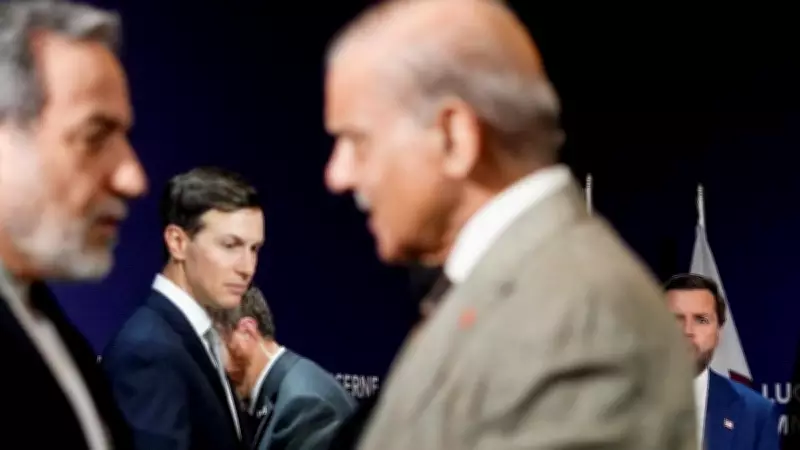
The first round of indirect talks between the United States and Iran, mediated by Oman, concluded on Saturday with both sides agreeing to establish working groups on a maritime safety initiative for the Strait of Hormuz and a de-confliction mechanism to avoid accidental military clashes. The talks, held in Muscat, were described as "constructive" by Omani officials, who shuttled between the two delegations in separate rooms.
Hormuz Safety Initiative
A key outcome was the agreement to form a joint working group on the "Hormuz Safety Initiative," aimed at ensuring safe passage for commercial shipping through the strategic waterway, through which about 20% of the world's oil passes. The initiative would involve coordination between the US Navy and Iran's Islamic Revolutionary Guard Corps (IRGC) to prevent incidents like the 2019 drone attacks on Saudi oil facilities. According to a US State Department official, the working group will discuss technical measures such as communication protocols and transit schedules.
De-Confliction Cell
Both sides also agreed to set up a "de-confliction cell" to reduce the risk of direct military confrontation. This cell would operate as a communication channel between US Central Command and the IRGC Navy, enabling rapid exchange of information to avoid misunderstandings. "The de-confliction cell is crucial to prevent miscalculations that could escalate into a broader conflict," said an Omani mediator familiar with the talks. The cell is expected to be operational within weeks.

Nuclear Deal Prospects
While the talks did not directly address the stalled 2015 nuclear deal (JCPOA), Iranian officials signaled willingness to discuss the nuclear file in subsequent rounds. A senior Iranian diplomat stated, "We are prepared to negotiate on all issues, including the nuclear program, if the US lifts sanctions and provides guarantees." The US envoy for Iran, Robert Malley, reiterated that Washington is open to a mutual return to compliance with the JCPOA but stressed that time is limited as Iran's nuclear advances continue.
Next Steps
Oman will host a second round of talks in two weeks. The agenda will include the Hormuz safety initiative and the de-confliction cell, with the possibility of expanding to nuclear discussions. Both sides expressed cautious optimism, though significant gaps remain, particularly on sanctions relief and uranium enrichment levels. Iran currently enriches uranium to 60% purity, close to weapons-grade, while the US insists on a return to JCPOA limits of 3.67%.






