

US Military Deploys Over 50 Fighter Jets to Middle East Amid Critical Iran Nuclear Negotiations
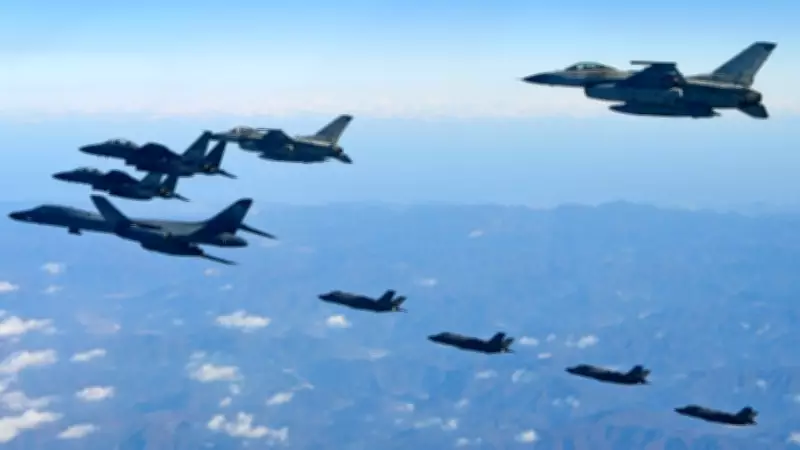
In a significant escalation of military presence, the United States has moved more than 50 fighter jets toward the Middle East within the past 24 hours. This deployment coincides with high-stakes nuclear talks between Washington and Tehran, highlighting the tense geopolitical landscape. The aircraft involved include advanced models such as F-22 Raptors, F-35 Lightning IIs, and F-16 Fighting Falcons, accompanied by several refueling planes. Social media accounts dedicated to monitoring military flights have tracked these movements, providing real-time insights into the strategic shifts.
Unprecedented Military Buildup and Extended Deployments
Recent flight tracking data, as cited by the Times of Israel, reveals an unusually heavy movement of US airpower toward bases in Europe and the Middle East. This buildup is not limited to fighter jets; it also includes continued deliveries of US air defense systems to the region, according to a US official speaking to CNN. Additionally, several American units already stationed in the Middle East, which were scheduled to rotate out in the coming weeks, have had their deployments extended. A source familiar with the matter confirmed this extension, indicating a prolonged military commitment.
Flight-tracking data further shows that dozens of US military cargo planes have transported equipment from the United States to key allies in the region, including Jordan, Bahrain, and Saudi Arabia. Over the recent weeks, more than 250 US cargo flights into the Middle East have been recorded, underscoring the scale of logistical support. Notably, some of the aircraft deployed are the same types used in last June’s Operation Midnight Hammer, a targeted mission on Iranian nuclear facilities, as reported by people familiar with the matter to Air & Space Forces Magazine.

Nuclear Talks Progress Amid Military Tensions
The military deployments unfold as Washington and Iran held a second round of talks in Geneva focused on Tehran’s nuclear program. Iranian Foreign Minister Abbas Araghchi stated that the meeting resulted in an agreement on "guiding principles" for future negotiations. Both sides plan to exchange draft texts for a potential deal, although no specific timeline has been set for this exchange or for further discussions. Araghchi emphasized, "We have reached understandings on the guiding principles, but the drafting and writing phase of the agreement will be more difficult." He added that there is now a clearer framework and path forward, but significant work remains for both parties to bridge their differences.
The Trump administration has been adamant in its demands, insisting that Iran agree to a new nuclear accord that prohibits uranium enrichment. President Donald Trump has issued military threats for weeks, initially warning Iranian leaders last month that he was prepared to order an attack if the government did not cease killing protesters. The first round of talks, held on February 6 in Oman, was conducted indirectly, with SUVs flying the American flag entering the palace venue only after it appeared Iranian officials had departed, reflecting the delicate nature of these diplomatic engagements.
This combination of military posturing and diplomatic efforts underscores the complex dynamics at play, as the United States seeks to leverage its military strength to influence nuclear negotiations while navigating the risks of escalation in a volatile region.






