The United States launched fresh military strikes against Iran on Saturday, following Tehran's attack on a commercial vessel in the Persian Gulf. The US also announced the closure of the Strait of Hormuz, a critical waterway for global oil shipments, according to a statement from the Pentagon.
The strikes targeted Iranian military installations, including missile bases and naval facilities, in retaliation for what the US called a "blatant attack" on a ship flagged under a allied nation. The vessel, identified as the MV Star of the Seas, was hit by an Iranian drone strike while transiting the Gulf of Oman, causing significant damage and injuring three crew members, according to the US Central Command.
Sequence of Events
The attack on the MV Star of the Seas occurred early Friday morning, when an Iranian Shahed-136 drone struck the ship's bridge, igniting a fire that was later contained. The US Navy responded by dispatching the destroyer USS Cole to assist, and the vessel was towed to a safe port. In response, the White House convened an emergency meeting of the National Security Council, leading to the authorization of retaliatory strikes.

The US strikes, conducted using B-2 bombers and Tomahawk missiles launched from submarines, hit over a dozen targets in southern Iran, including air defense systems and ammunition depots. The Pentagon confirmed that the operations were "successful" and that all US aircraft returned safely.
Closure of the Strait of Hormuz
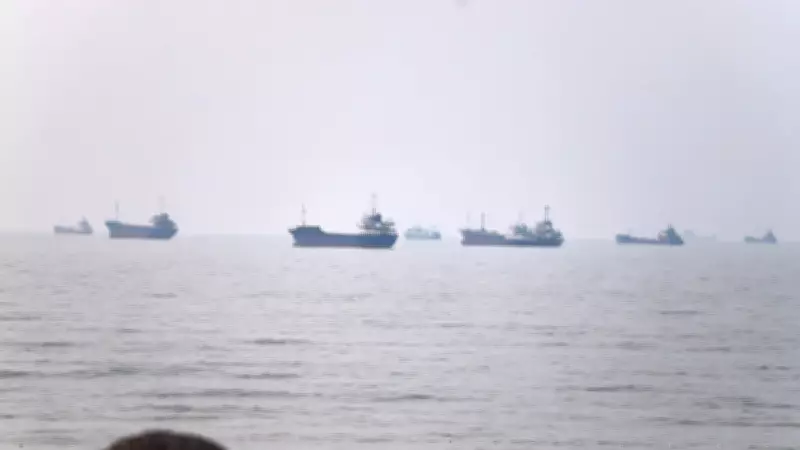
In a separate announcement, the US Navy declared the closure of the Strait of Hormuz to all commercial shipping until further notice, citing the threat of further Iranian attacks. The strait, a narrow passage between Iran and Oman, handles about 20% of the world's oil supply, making its closure a major economic concern. The US Navy's Fifth Fleet stated that it would enforce a blockade to prevent any vessels from transiting the strait, and that coalition forces were on high alert.
Iran's Revolutionary Guard Corps (IRGC) responded by threatening to target any US or allied warships in the region, raising fears of a broader conflict. Iranian state media quoted an IRGC commander as saying, "We will respond to any aggression with full force. The closure of the Strait of Hormuz is an act of war, and we will defend our territorial waters."
Global Reactions and Impact
The strikes and the strait closure drew immediate international reactions. The United Nations Security Council scheduled an emergency session to discuss the escalating situation. Oil prices surged by over 8% in Asian trading, with Brent crude jumping above $95 per barrel, as markets braced for supply disruptions. Major shipping companies announced they would reroute vessels via the Bab el-Mandeb strait or around the Cape of Good Hope, adding significant costs and delays.
European Union foreign policy chief Josep Borrell called for restraint from both sides, urging a de-escalation to avoid a full-scale war. In a statement, Borrell said, "The attacks on civilian shipping are unacceptable, but the closure of the Strait of Hormuz is a disproportionate response that will have severe consequences for the global economy. We call on both parties to return to diplomatic channels."
Background and Previous Tensions
This latest escalation follows months of heightened tensions between the US and Iran, including previous attacks on oil tankers and drone incidents. The US had warned Iran against disrupting shipping lanes, and the Biden administration had imposed new sanctions on Iranian oil exports earlier this year. The closure of the Strait of Hormuz marks a significant escalation, as it had remained open even during the Iran-Iraq war in the 1980s.
According to a report by the International Energy Agency, the strait is used by about 17 million barrels of oil per day, and its closure could push oil prices above $100 per barrel if sustained for more than a week. The US has stated that it is prepared to release strategic petroleum reserves to stabilize markets, but the impact on global supply chains is expected to be severe.