

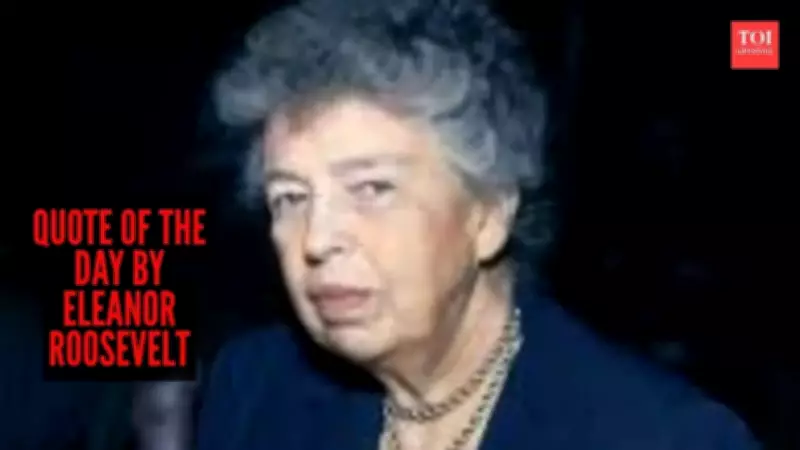
Eleanor Roosevelt: A Legacy of Moral Leadership and Human Rights Advocacy
Eleanor Roosevelt stands as one of the most influential women of the twentieth century, not merely due to her position as First Lady of the United States, but because of how she harnessed that role to champion moral leadership on a global scale. Her journey from a challenging childhood to becoming a beacon of hope and justice continues to inspire generations worldwide.
From Childhood Adversity to Empathetic Leadership
Born in 1884 into a prominent yet emotionally turbulent family, Eleanor Roosevelt's early years were marked by profound loss, insecurity, and self-doubt. These formative experiences, rather than breaking her spirit, forged a deep sense of empathy and sensitivity towards those who felt marginalized or unheard. It was this personal understanding of struggle that fueled her lifelong commitment to advocating for the voiceless and oppressed.
Redefining the Role of First Lady
During her tenure as First Lady from 1933 to 1945, Eleanor Roosevelt shattered traditional expectations, transforming the position from a ceremonial one into a powerful platform for social change. Far from being a passive figure beside President Franklin D. Roosevelt, she embarked on extensive travels, engaged directly with ordinary citizens, held regular press conferences, and authored the widely read daily newspaper column, My Day. Through these initiatives, she became a vital bridge connecting the government with the people, particularly focusing on women, minorities, and the impoverished.

Her courageous willingness to address social injustices, economic hardships, and the fundamental dignity of all individuals earned her immense respect as one of the most prominent public voices of her era. Eleanor's approach demonstrated that leadership could be both compassionate and impactful, setting a new standard for public service.
A Lasting Impact Beyond the White House
Eleanor Roosevelt's influence extended far beyond her years in the White House. As a delegate to the United Nations, she played a pivotal role in drafting the Universal Declaration of Human Rights, firmly advocating that freedom, equality, and dignity were universal rights, not privileges reserved for a few. Her philosophy centered on moral courage, personal responsibility, and continuous growth, believing that individuals had a duty to lead meaningful lives and contribute positively to society.
The Philosophy Behind Her Famous Quote
The widely attributed quote, “The purpose of life is to live it, to taste experience to the utmost, to reach out eagerly and without fear for newer and richer experience,” encapsulates Eleanor Roosevelt's deeply personal worldview. This statement emphasizes that life should be embraced fully, experiencing both joys and challenges with an open heart. She viewed life as the ultimate teacher, arguing that a shallow existence, driven by fear of risk, stifles personal growth.
The phrase “without fear” holds particular significance, as Eleanor Roosevelt herself confronted fears of failure, rejection, and change. Yet, she insisted that fear should never dictate one's boundaries. Embracing new experiences requires courage, curiosity, and humility, accepting uncertainty as a pathway to wisdom and compassion. Thus, her words serve as both an invitation and a challenge to prioritize engagement over comfort and curiosity over fear.
Relevance in Today's World
Eleanor Roosevelt's insights remain profoundly relevant, addressing the universal human tension between safety and growth. Her life exemplifies that true meaning is found not in avoiding struggles, but in confronting life with openness and determination. In an era where social justice and human rights continue to be pressing issues, her legacy reminds us of the power of empathetic leadership and the importance of advocating for the marginalized.
Through her unwavering commitment to moral principles and human dignity, Eleanor Roosevelt left an indelible mark on history, inspiring countless individuals to strive for a more just and compassionate world.

