

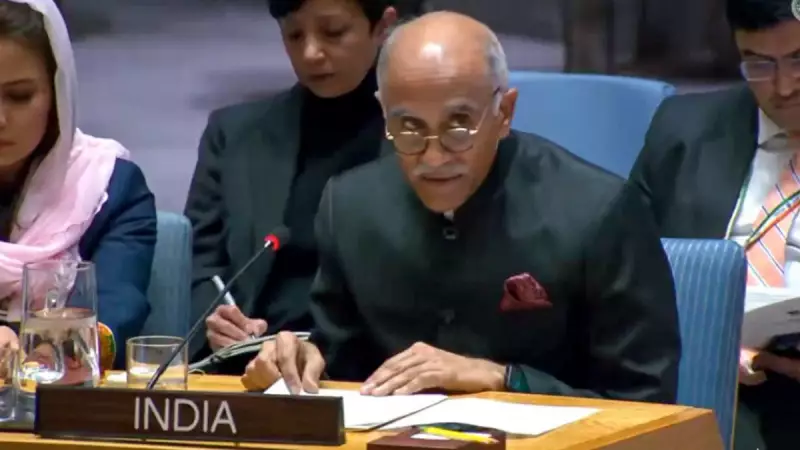
In a powerful and unequivocal address at the United Nations Security Council, India launched a sharp diplomatic offensive against Pakistan, branding its neighbour as the 'global epicentre of terrorism'. The statement, delivered by India's Permanent Representative to the UN, Ambassador Ruchira Kamboj, highlighted Pakistan's persistent support for cross-border terror and also raised pointed questions about the detention of former Prime Minister Imran Khan.
A Stern Accusation at the World's Highest Forum
Ambassador Kamboj's remarks came during a UNSC debate on 'Threats to International Peace and Security' on December 16, 2024. She did not mince words, directly accusing Pakistan of serving as the primary source and breeding ground for terrorist activities that threaten regional and global stability. The Indian envoy underscored that despite repeated calls from the international community, Pakistan has continued to provide safe havens, funding, and training to known terrorist entities.
The speech systematically dismantled Pakistan's frequent attempts to portray itself as a victim of terrorism. Kamboj emphasized that the country's established state practice of harbouring and aiding terrorists is the core issue destabilizing South Asia. This strong language marks a significant escalation in India's diplomatic rhetoric against Pakistan on the global stage, holding it directly accountable for the consequences of its policies.

Highlighting the Plight of Imran Khan
In a notable expansion of the critique, India's representative also brought up the domestic political situation within Pakistan. Ambassador Kamboj explicitly mentioned the ongoing detention of former Pakistani Prime Minister Imran Khan, framing it as a matter of concern that reflects the country's internal democratic deficits and governance failures.
By flagging Khan's incarceration, India aimed to spotlight the prevailing political instability and the alleged weaponization of state institutions in Pakistan. This move connects the external threat of terrorism with internal political repression, presenting a holistic picture of Pakistan as a state where such issues are deeply intertwined. The reference serves to counter any potential sympathy for Pakistan's internal narratives by pointing to its treatment of a major political figure.
Context and Implications of the Diplomatic Stand
This forceful condemnation at the UNSC is not an isolated event but part of India's consistent strategy to keep international focus on Pakistan's role in fostering terrorism. The debate provided a high-visibility platform to reiterate long-standing grievances, including Pakistan's support for militants operating in Jammu and Kashmir.
The implications of this speech are multifaceted. Diplomatically, it reinforces India's position that meaningful dialogue with Pakistan is impossible without a verifiable and permanent end to cross-border terrorism. It also serves to pre-empt and counter any potential Pakistani propaganda at international forums. Furthermore, by raising Imran Khan's case, India signals its readiness to comment on Pakistan's internal affairs, just as Pakistan often comments on India's.
The strong wording from Ambassador Kamboj is likely to resonate with several member states who share concerns about terrorism emanating from the region. It keeps the pressure on Pakistan to demonstrate tangible action against all terrorist networks operating from its soil, a demand that remains largely unfulfilled according to India and its allies.

