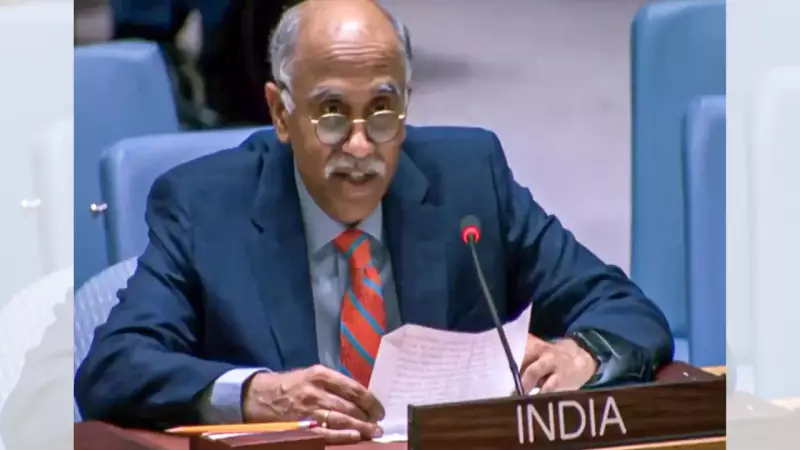
In a powerful diplomatic confrontation at the United Nations Security Council, India delivered a scathing critique of Pakistan, accusing its neighbor of pursuing a destructive agenda against India while presenting a distorted narrative about recent military operations.
India's Firm Rejection of Pakistan's Narrative
India's Permanent Representative to the United Nations, Ambassador Parvathaneni Harish, forcefully countered Pakistan's claims during an open debate focused on international law and multilateralism. He characterized Pakistan's approach as fixated on a single-point agenda designed to harm India, while offering what he described as a false and self-serving account of events surrounding Operation Sindoor.
The Context: Pahalgam Terror Attack
Harish reminded the international community of the brutal April 2025 terrorist attack in Pahalgam that claimed the lives of 26 innocent civilians. This horrific incident, which the Security Council itself condemned, served as the catalyst for India's subsequent military response. The ambassador emphasized that Pakistan-sponsored terrorists were responsible for this reprehensible act of violence.

Operation Sindoor: A Measured Response
Detailing India's military actions, Harish described Operation Sindoor as:
- Measured and non-escalatory in its execution
- Responsibly targeted at dismantling terrorist infrastructure
- A direct response to Pakistan's continued threats against India
The operation, conducted in the early hours of May 7, successfully neutralized at least 100 terrorists who posed a direct threat to Indian security. Harish revealed a significant diplomatic detail: until May 9, Pakistan had been threatening further attacks on India, but on May 10, Pakistani military officials directly contacted their Indian counterparts pleading for a cessation of hostilities.
Evidence in the Public Domain
The Indian diplomat pointed to publicly available evidence showing destroyed runways and burnt-out hangars at Pakistani airbases, demonstrating the effectiveness of India's counter-terrorism measures. He stressed that India was merely implementing the Security Council's own call to hold terrorists and their sponsors accountable.
Rejecting the Normalization of Terrorism
Harish firmly rejected Pakistan's attempt to establish what he called a dangerous new normal regarding terrorism. Terrorism can never be normalized as Pakistan apparently wishes, he declared, adding that it is unacceptable to tolerate Pakistan's continued use of terrorism as an instrument of state policy.
The ambassador made it clear that India will take all necessary measures to protect its citizens and ensure national security, emphasizing that the United Nations should never become a platform for legitimizing terrorist activities.
Broader Call for United Nations Reform
Beyond the immediate India-Pakistan tensions, Harish used the platform to advocate for sweeping reforms within the United Nations system. He argued that the current Security Council structure reflects geopolitical realities of a bygone era that no longer align with contemporary global dynamics.
The Need for Practical Solutions
The Indian representative warned that multilateralism faces significant strain due to institutional paralysis in addressing international conflicts. The rule of law becomes meaningless without enforceability, he noted, urging a shift toward pragmatic solutions that positively impact citizens' daily lives.
Harish pressed for Security Council expansion in both permanent and non-permanent categories, asserting that global governance must evolve to remain effective and credible in our rapidly changing world. This reform, he suggested, is essential for the United Nations to maintain relevance and effectively address twenty-first-century challenges.

The diplomatic exchange highlights ongoing tensions between the South Asian neighbors while underscoring India's commitment to both national security and international institutional reform. As geopolitical dynamics continue to shift, such debates at the United Nations Security Council reveal the complex interplay between counter-terrorism efforts, diplomatic relations, and global governance structures.