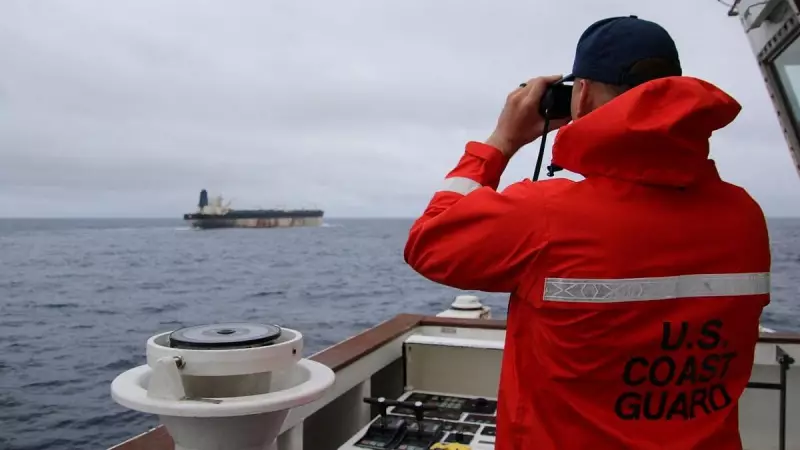
The United States Coast Guard has seized a Russian-flagged oil tanker in the North Atlantic, an incident that has drawn in India after it was revealed that three Indian nationals were part of the vessel's crew. The seizure occurred on Wednesday, with the Russian Foreign Ministry asserting that information about the tanker had been repeatedly conveyed to American authorities beforehand.
Details of the Maritime Seizure
The seized vessel is the Marinera, which was previously known under the name Bella 1. The US Coast Guard intercepted and took control of the tanker in international waters of the North Atlantic Ocean on Wednesday, 7th January 2026. While the precise legal grounds for the seizure have not been fully detailed in initial reports, such actions typically relate to violations of international sanctions.
A significant detail that brings the incident closer to home for India is the composition of the crew. Among the seafarers on board the Marinera at the time of its seizure were three Indian citizens. The welfare and legal status of these Indian nationals are now a key concern for Indian diplomatic channels.

Russia's Diplomatic Response
The Russian Foreign Ministry has officially commented on the event, presenting a contrasting narrative to that of the US authorities. Russian officials stated that information concerning the Marinera tanker had been passed to the United States on multiple occasions. This claim suggests Russia believes the US action was undertaken despite prior knowledge and communication regarding the vessel's identity and operations.
This development adds another layer of complexity to the already strained relations between Washington and Moscow. The seizure of a Russian-flagged vessel by US forces is a serious maritime and diplomatic event, potentially indicative of escalating enforcement of economic sanctions.
Implications and Next Steps
The immediate priority for the Indian government is to establish contact with the three Indian crew members to ensure their safety and well-being. The Ministry of External Affairs is likely to liaise with both US and Russian officials to ascertain the facts of the case and understand the legal process that will follow.
For the families of the seafarers, the news brings anxiety and uncertainty. The global shipping industry often employs multinational crews, and incidents like these highlight the vulnerabilities faced by mariners caught in geopolitical crosscurrents. The incident underscores the broader challenges in international waters where national laws and sanctions regimes increasingly intersect.
As the situation develops, further details are expected to emerge regarding the specific charges against the vessel, the timeline for legal proceedings, and the eventual fate of the crew. The incident serves as a stark reminder of how international tensions can directly impact the lives of ordinary workers on the high seas.