

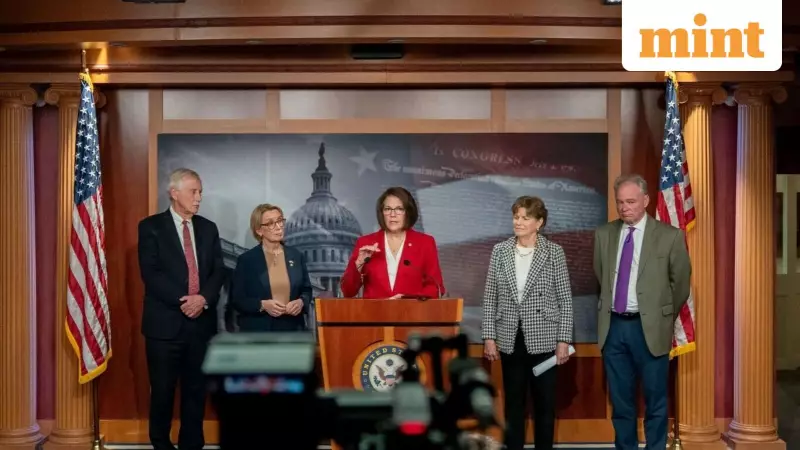
In a dramatic political breakthrough, eight moderate Senate Democrats have defied their party leadership to join Republicans in passing legislation that would end the record-breaking 40-day United States government shutdown. The crucial vote occurred on Sunday, November 9, 2025, at the US Capitol in Washington, DC.
The Breakthrough Vote and Its Immediate Impact
The Senate voted to advance a House-passed bill by a 60-40 margin, which represents the absolute minimum required to overcome a Senate filibuster. This decisive action promises to conclude a shutdown that has created widespread disruption across the United States, including sidelining federal workers, delaying critical food aid programs, and causing significant snarls in air travel.
The bill in question will be amended to fund the government until January 30 and will also incorporate a package of three full-year appropriations bills. This stopgap measure provides temporary relief while setting the stage for further budgetary negotiations.

The Political Deal and Healthcare Concessions
The agreement was secured after the eight Democratic senators rebuffed their own party's leadership, agreeing to proceed with ending the shutdown without an immediate guarantee on extending the Affordable Care Act's health insurance subsidies. This move angered many within the Democratic caucus who believed the party should continue fighting for this priority.
However, as part of the deal struck with these eight lawmakers, Republicans have agreed to hold a vote in December on extending the Affordable Care Act subsidies. These subsidies, which are crucial for helping lower-income Americans afford private health insurance, were scheduled to expire at the end of the year and had been a central Democratic demand throughout the funding battle.
Meet the Eight Senators Who Made History
The group of senators who provided the critical votes to break the political deadlock represents a diverse cross-section of the Democratic party. They are:
- Senator Catherine Cortez Masto of Nevada
- Senator Dick Durbin of Illinois
- Senator John Fetterman of Pennsylvania
- Senator Maggie Hassan of New Hampshire
- Senator Tim Kaine of Virginia
- Senator Angus King of Maine (an Independent)
- Senator Jacky Rosen of Nevada
- Senator Jeanne Shaheen of New Hampshire
An analysis of these eight lawmakers reveals several interesting commonalities. Most, though not all, previously held state-level office before their Senate careers, and a significant number come from presidential swing states, potentially making them more attuned to bipartisan compromise. Notably, two of the senators have announced they will retire from the Senate after their current terms conclude, and two others are senior members of the powerful Senate Appropriations Committee. A key political reality is that none of these eight senators faces reelection in 2026, potentially giving them more freedom to take politically risky votes.
This bipartisan agreement marks a significant moment in American politics, demonstrating that even in an era of deep political division, cross-party cooperation remains possible to resolve critical governance crises affecting millions of citizens.






