

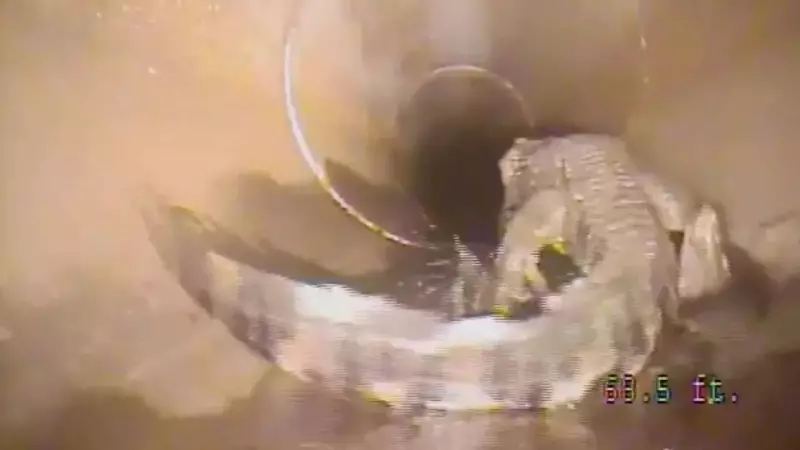
The age-old urban legend of alligators lurking in city sewers has taken a startlingly real turn in Florida. In a scene straight out of a horror movie, a routine public works inspection in the city of Oviedo uncovered a five-foot American alligator residing in a stormwater drain beneath a road. The discovery, made by a robotic inspection camera, has captivated the public and reignited discussions about the intersection of urban development and wildlife habitats.
Robotic Camera Stumbles Upon Subterranean Reptile
The incident occurred during a standard check for persistent potholes on a city road. Engineers deployed a small, camera-equipped robot into the stormwater drainage system to assess the structural integrity below the surface. What they expected to be a mundane survey quickly turned extraordinary. As the robot navigated the sludge-lined pipe, operators noticed two faint, glowing spots in the darkness ahead, initially mistaking them for a toad's eyes.
The truth was far more formidable. The camera soon illuminated the unmistakable form of a five-foot American alligator. The reptile, disturbed by the intruding device, assumed a defensive posture with its mouth agape before retreating slowly deeper into the concrete tunnel. The Oviedo city government shared the bizarre footage on its social media page, where it rapidly went viral.

From Viral Video to Urban Wildlife Reality
Officials theorize the alligator likely entered the network of drainage tunnels from one of Oviedo's retention ponds, designed for stormwater control. In Florida's wetland-rich environment, these ponds are often connected to tunnels running under roads and neighbourhoods, unintentionally creating corridors for wildlife. Alligators, being resilient creatures, can thrive in such enclosed spaces where there is water, protection from the elements, and minimal human disturbance.
The viral video, with its eerie, robot's-eye-view lighting, drew immediate comparisons to horror films and the long-standing 'sewer gator' myth. Social media reactions blended shock with dark humour, with many users calling it a quintessentially 'Florida' experience. While the city assured residents the alligator posed no immediate public threat, they highlighted the event as a successful test of technological robotics in infrastructure inspection.
Why City Encounters With Alligators Are Rising
The Oviedo case is not an isolated freak event but a symptom of a broader trend. As urban expansion continues to encroach upon natural wetland habitats, animals like alligators are forced to adapt. Storm drains, canals, golf course water hazards, and residential ponds are increasingly becoming part of their extended territory.
The American alligator, which can grow up to 15 feet long and weigh 450 kilograms, is the largest reptile in the United States. Although they generally avoid humans, their appearance in unexpected urban areas raises critical questions about urban planning, ecosystem management, and how humans can coexist with native species in shared landscapes. This discovery proves that sometimes, the myths we whisper about are closer to reality than we think.






