

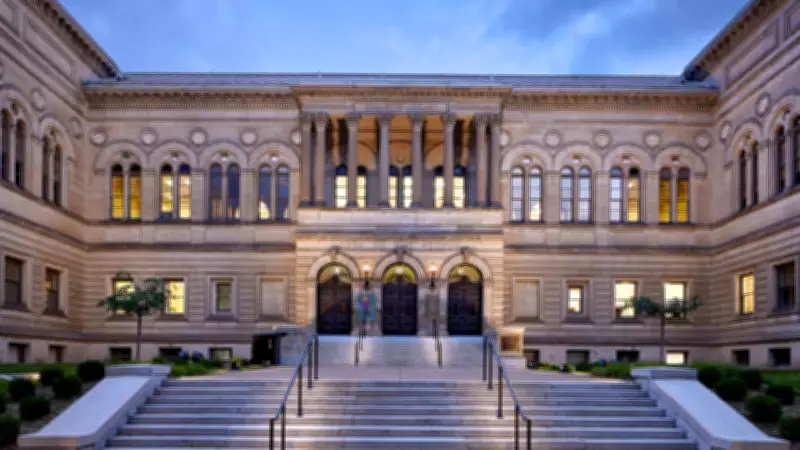
Andrew Carnegie: The Industrial Titan Who Built a Global Library Empire
Few individuals in modern history embody the transformative power of education and philanthropy as profoundly as Andrew Carnegie. Born into dire poverty in Scotland and raised in the industrial heartlands of the United States, Carnegie ascended to become one of the wealthiest figures of the nineteenth century through his dominant steel empire. However, his enduring legacy extends far beyond industrial might. After accumulating an immense fortune, Carnegie dedicated approximately 90% of his wealth to public causes, with a particular emphasis on establishing libraries globally. Inspired by the free access to books that educated him as a young laborer, he funded thousands of public libraries, firmly believing that knowledge should be accessible to all who seek it.
Humble Beginnings: From Scottish Weavers to American Labor
Andrew Carnegie was born in 1835 in Dunfermline, Scotland, into a family of handloom weavers. His father, William Carnegie, faced severe economic struggles as mechanized textile factories displaced traditional weaving during the Industrial Revolution. This hardship ultimately compelled the family to emigrate to the United States in 1848, settling in Allegheny, Pennsylvania, which is now part of Pittsburgh.
Life in America presented significant challenges. At the tender age of 13, Carnegie began working as a bobbin boy in a cotton factory, earning a meager wage of just over a dollar per week. Despite the grueling labor and long hours, he maintained an insatiable curiosity about the world. Carnegie later reflected on his limited formal education in his autobiography, writing: "My schooling was very slight, yet I had a strong desire for knowledge." This profound hunger for learning would fundamentally shape his life's trajectory.

A Pivotal Moment: The Gift of Access to Books
A critical turning point occurred through the generosity of Colonel James Anderson, a local businessman who permitted working boys to borrow books from his private library every Saturday evening. For young Carnegie, this access opened an entirely new world of possibilities. In his memoirs, Carnegie expressed: "Colonel Anderson opened his little library to us working boys, and it was the precious books from that collection that awakened my desire for knowledge." He frequently credited this experience with inspiring his lifelong advocacy for public libraries, often stating that if wealth ever came his way, he would create similar opportunities for others.
Rapid Ascent: From Telegraph Messenger to Steel Magnate
Carnegie's career advanced swiftly after he entered the railroad industry as a telegraph messenger. His intelligence, relentless ambition, and keen investment acumen quickly became evident. By the late nineteenth century, he had established Carnegie Steel, which grew into the preeminent steel producer in the United States. In 1901, Carnegie sold his company to financier J.P. Morgan, who merged it into U.S. Steel, creating the world's first billion-dollar corporation. This sale catapulted Carnegie into the ranks of the wealthiest individuals in history, with a personal fortune estimated at $480 million, equivalent to tens of billions in today's currency.
The Philosophy of Philanthropy: The Gospel of Wealth
Long before divesting his steel empire, Carnegie had begun contemplating the responsible use of his wealth. In 1889, he published an influential essay titled The Gospel of Wealth, which articulated his philosophy of philanthropy. Carnegie argued that the affluent had a moral obligation to utilize their fortunes for societal benefit. He famously wrote: "The man who dies thus rich dies disgraced." He believed philanthropy should not merely alleviate poverty but foster opportunities for self-improvement, directing his charitable efforts toward education, science, and culture.
Building a Global Network of Public Libraries
Carnegie's most ambitious philanthropic endeavor was the creation of public libraries. Between 1883 and 1929, funding from his foundations supported the construction of approximately 2,509 libraries worldwide, with the broader network associated with his philanthropy exceeding 3,000 institutions. This program spanned multiple countries, including:

- United States: About 1,689 libraries
- United Kingdom and Ireland: More than 660 libraries
- Canada: Over 120 libraries
- Australia, New Zealand, South Africa, and the Caribbean: Dozens more libraries
Carnegie did not simply distribute funds indiscriminately. Communities seeking a library had to meet specific conditions: they were required to provide land for the building and commit public funding for its ongoing maintenance. This ensured that libraries would evolve into sustainable civic institutions rather than temporary charitable projects, fundamentally transforming public access to education across countless towns and cities.
The Enduring Significance of Libraries to Carnegie
Carnegie regarded libraries as one of the most potent instruments for social mobility. Unlike formal educational institutions that required enrollment, libraries were open to anyone eager to learn. He once articulated: "There is not such a cradle of democracy upon earth as the free public library." For Carnegie, libraries symbolized opportunity, enabling workers, immigrants, and children from impoverished backgrounds to educate themselves, mirroring his own journey decades earlier.
Giving Away a Fortune: A Commitment to Public Good
Carnegie ultimately donated approximately $350 million of his fortune before his death in 1919, representing roughly 90% of his total wealth. Beyond libraries, his philanthropy funded major institutions such as:
- Carnegie Corporation of New York
- Carnegie Endowment for International Peace
- Carnegie Mellon University
- Carnegie Institution for Science
- Carnegie Hall in New York
Nevertheless, the thousands of libraries he financed remain the most visible embodiment of his philanthropic philosophy.
A Legacy That Stands the Test of Time
More than a century after his passing, numerous Carnegie libraries continue to function as public libraries, museums, or community centers. Their distinctive stone facades and classical architecture endure across cities and small towns throughout the English-speaking world. Historians frequently highlight Carnegie's library program as one of the most successful philanthropic initiatives ever undertaken. What originated with a young immigrant borrowing books from a modest private library ultimately blossomed into a global network of institutions dedicated to public learning, leaving an indelible mark on education and society.





