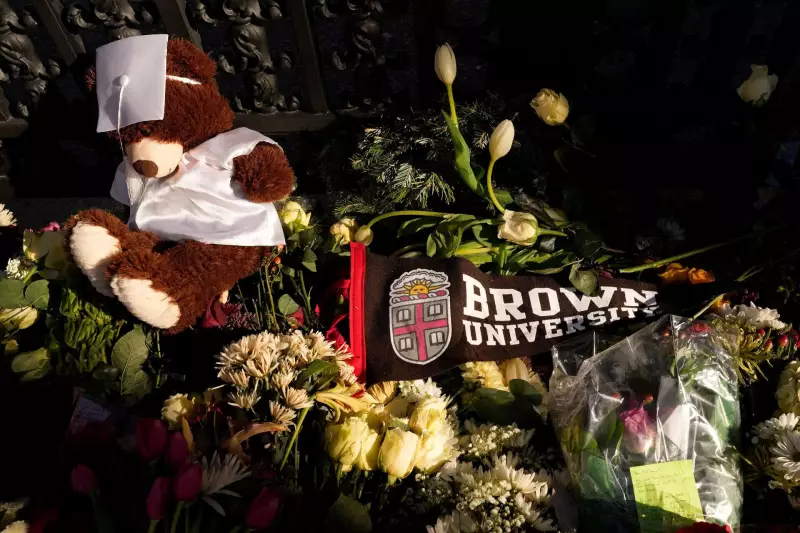
In the aftermath of a campus tragedy, there are two distinct timelines. The first is measured in frantic minutes, blaring sirens, and urgent alerts. The second, far longer phase, is defined by the systems that fail to work as promised. For the community at Brown University in the United States, life is now firmly in that second, uncertain phase.
A Lingering Investigation and Mounting Frustration
Days after a man walked onto the university's campus during the critical exam season and opened fire inside a crowded lecture hall, the armed suspect remains unidentified and free. The shooting, which resulted in the deaths of two students and injuries to nine others, has now shifted the focus from the immediate horror to the glaring shortcomings in the response mechanisms.
According to the Associated Press, a person of interest detained shortly after the incident was released without any charges. This has left investigators with limited clues, relying mostly on the security footage recovered so far, which has provided few clear leads. Even two days after the attack, law enforcement officers were engaged in basic groundwork, canvassing nearby homes and businesses for more camera footage and physical evidence.

For students and local residents, the pace of the probe has raised serious questions. "The fact that we’re in such a surveillance state but that wasn’t used correctly at all is just so deeply frustrating," said Li Ding, a student at the Rhode Island School of Design who is part of a Brown University dance team.
Security Gaps and Student-Led Action
The frustration stems from visible gaps in campus security. While Brown University has cameras across its premises, few were positioned in or around the Barus and Holley building, which houses the engineering school and was the site of the attack. Rhode Island Attorney General Peter Neronha attributed this to the building's older architecture.
This lack of usable footage has forced investigators to turn to the public for help. The FBI's Boston Special Agent in Charge, Ted Docks, announced a reward of fifty thousand dollars for information leading to the shooter's identification and conviction. He described the analysis of bullet trajectories and crime scene processing as "painstaking work."
In response, students have taken matters into their own hands. Hundreds, including Ding, have signed petitions demanding enhanced security measures in university buildings, arguing that the burden of safety has fallen disproportionately on them. "I think honestly, the students are doing a more effective job at taking care of each other than the police," Ding stated.
Broken Systems: Alerts, Coordination, and Trust
The problems extended beyond cameras. Students confirmed that Brown's emergency alert system did notify them of an active shooter. However, many reported a critical lack of guidance on what to do during the prolonged lockdown that followed.
Chiang Heng Chien, a 32-year-old doctoral engineering student, described hiding under desks and turning off lights after receiving an alert at 4:22 pm on Saturday. "While I was hiding in the lab, I heard the police yelling outside but my friends and I were debating whether we should open the door, since at that moment the shooter was believed to be nearby," he recounted.
The city's public alert system also faced scrutiny. Providence recently transitioned from a mobile app to a web-based system, requiring residents to re-register online. Emely Vallee, a mother living a mile from campus, received no official alerts and depended on friends and news reports. She was unaware the old system had been phased out.
Law enforcement experts point to a broader, systemic issue. Terrance Gainer, a former Illinois official, noted that campus police departments are typically smaller, less funded, and less equipped than city forces. Coordination with local police is often inconsistent, affecting both response times and investigative reach—a pattern seen in past incidents at other universities.

The violence reverberated beyond campus gates. Hailey Souza, a 23-year-old manager at a nearby smoothie shop, finished her shift minutes before the shooting. Driving home, she witnessed a bleeding victim on the pavement and the ensuing panic. She later learned one of the victims, Ella Cook, was a regular customer who had just mentioned her final exam was on Saturday. Souza herself never received an emergency alert.
For Brown University, the questions now are profound. They concern cameras that saw too little, alerts that failed to reach everyone, and systems that only partially functioned. These are not loud failures but quiet, dangerous gaps—visible in delayed footage, unclear instructions, and students debating their safety behind closed doors. As the investigation continues, these very gaps are eroding the sense of security and the trust students place in the institutions meant to protect them.