

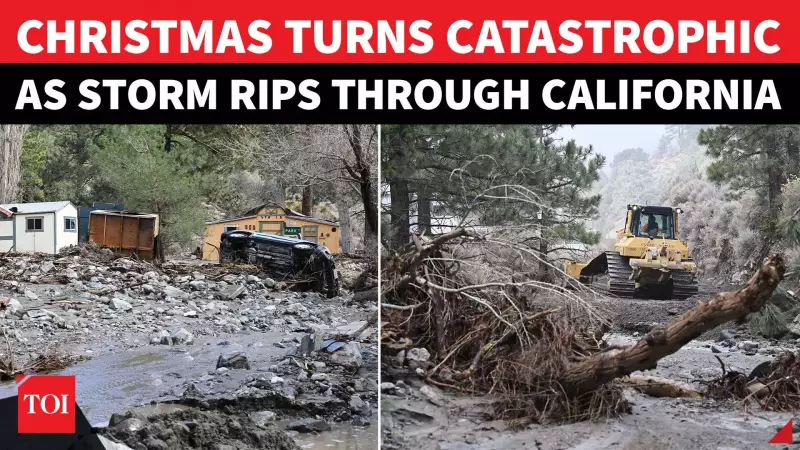
A festive Christmas in Southern California turned into a scene of devastation as a series of powerful storms battered the region, prompting Governor Gavin Newsom to declare a state of emergency. The relentless holiday weather unleashed flash floods and deadly mudslides, leading to widespread destruction, mass evacuations, and the tragic loss of at least three lives.
Holiday Cheer Turns to Catastrophe
What was meant to be a time of celebration quickly descended into chaos. Torrential rain submerged streets, turning them into rivers, and buried homes under cascades of mud. The force of the storm was so severe that it forced emergency crews to perform dramatic, high-risk rescues. Residents were trapped in a variety of perilous situations, including inside their vehicles, flooded apartment complexes, and even drainage tunnels.
The timing of the disaster, coinciding with Christmas celebrations, amplified the crisis. Communities were caught off guard as the intense rainfall rapidly overwhelmed infrastructure. The situation remains critical, with weather forecasts warning of more storms threatening areas already saturated with water.

Governor Newsom's Emergency Declaration
In response to the escalating crisis, California Governor Gavin Newsom took decisive action on December 26, 2025. He officially declared a state of emergency for multiple counties across Southern California. This declaration is crucial as it mobilizes state resources, streamlines aid, and provides necessary support for the impacted communities.
Governor Newsom's shock update highlighted the severity of the ongoing situation. The declaration specifically aims to assist regions that are doubly vulnerable—not only dealing with the current floods but also areas still scarred by recent wildfires. These burn-scarred zones are particularly susceptible to dangerous mudslides as the denuded land cannot absorb the sudden deluge of water.
Widespread Damage and Ongoing Threat
The aftermath of the storm is one of significant loss and disruption. Homes have been destroyed or severely damaged, either by floodwaters or mudslides. The confirmed death toll stands at at least three people, a number authorities fear could rise as assessments continue.
Rescue operations are ongoing, with emergency personnel working tirelessly to reach those still stranded or in danger. The focus is now shifting to recovery and assessing the full scale of the damage. However, the immediate concern is the forecast of additional storms. These new systems threaten to compound the disaster, dumping more rain on communities where the ground is already waterlogged and defenses are weakened.
This event underscores the increasing volatility of weather patterns and the compound risks faced by regions recovering from wildfires. For Southern California, the road to recovery will be long, beginning with ensuring the safety of all residents as the threat of more rain looms large.






