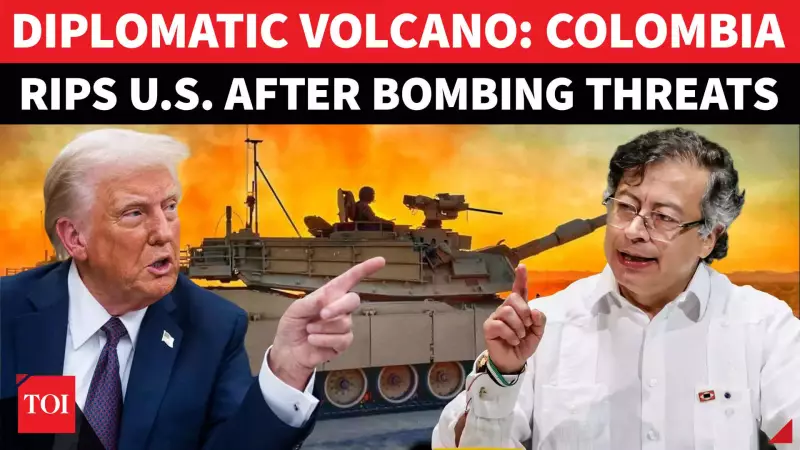
A major diplomatic controversy has erupted between Colombia and the United States following alarming remarks attributed to former US President Donald Trump. Colombian lawmaker David Ricardo Racero has publicly denounced what he calls a dangerous and invasive threat from Trump, suggesting Washington could extend military operations into Colombian territory.
Racero's Stern Condemnation and Call to Action
The political firestorm was ignited on December 3, 2025, after legislator Racero issued a forceful statement. He accused Trump of making aggressive comments warning that nations involved in drug production might face direct attacks. Racero characterized the tone of these remarks as not just alarming but also a severe violation of Colombia's sovereignty.
In his response, the Colombian congressman did not hold back. He labeled the US President as dangerous and urged his own country's Congress to deliver a firm and unified institutional rebuttal. Furthermore, Racero called upon the international community to take note of what he perceives as escalating intimidation tactics aimed directly at Colombia's President, Gustavo Petro, and the nation as a whole.

The Core of the Controversial Threat
While the exact context of Trump's statements is part of the ongoing news cycle, the core allegation centers on a hardline stance in the so-called war on drugs. The implied threat of land strikes or military action against source countries represents a significant and controversial escalation in US foreign policy rhetoric. This approach has sent shockwaves through diplomatic circles in Latin America, where such direct threats from a major power are rare and deeply destabilizing.
The incident highlights the fragile nature of international relations and underscores how statements from influential leaders can instantly fuel regional tensions. For Colombia, a nation with a complex history of internal conflict and drug trade issues, such external threats are particularly sensitive and politically charged.
Broader Implications and Regional Fallout
This confrontation is more than a war of words; it has tangible implications for US-Colombia relations and regional security dynamics. President Gustavo Petro's government, which has pursued distinct policies regarding drug enforcement and peace, now faces external pressure framed as national security concern by a former US president.
The situation places Colombia in a difficult position, balancing its national dignity and sovereignty against its longstanding, albeit complex, partnership with the United States. Racero's alert to the global community is a strategic move to internationalize the issue and seek multilateral support against what is viewed as unilateral bullying.
As the story develops, the world watches to see if other nations in Latin America will echo Colombia's concerns, potentially uniting against a common perceived threat to their autonomy. The firmness of the Colombian Congress's response and any reaction from the current US administration will be critical in determining whether this incident cools down or escalates into a more profound diplomatic rift.