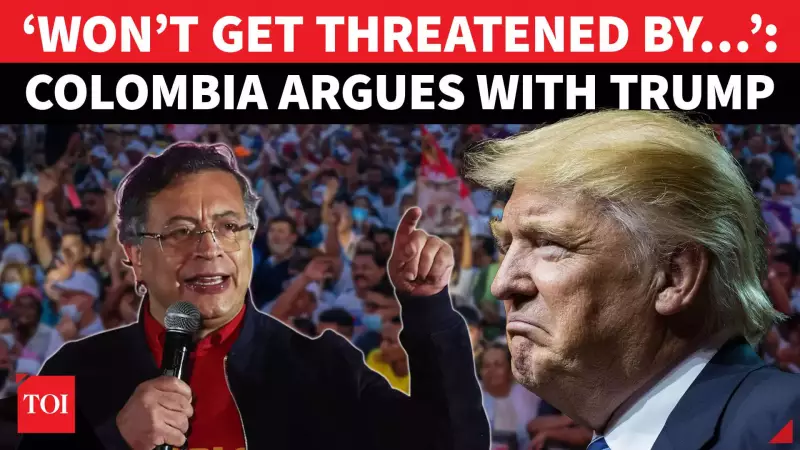
In a dramatic and defiant address from Bogotá, Colombian President Gustavo Petro has issued a sharp rebuke to former US President Donald Trump over recent allegations linking Colombia to cocaine production and trafficking. The incident has sent diplomatic tensions between the two nations soaring.
‘American Jaguar’ Warning in Bogotá Ceremony
During a fiery ceremony held on December 5, 2025, President Petro categorically rejected Trump's comments. He asserted that Colombia “is not to be threatened” and reminded the world of the immense sacrifice his country has made, having “bled for decades” in its brutal fight against narco-trafficking cartels and drug-related violence.
Petro defended his government's current strategy, which prioritises dialogue and social programs over purely militarised approaches. He framed this as the only viable long-term solution to the complex drug trade issue. The Colombian leader explicitly rejected what he termed as US insults and misjudgment, signalling a clear shift in tone from previous, more cooperative administrations.

From Verbal Threats to Potential Action
The most striking moment of Petro's speech was a stark warning directed at Washington. He cautioned that any escalation from verbal threats to concrete action against Colombia would awaken what he metaphorically called the “American jaguar” within the Colombian people. This phrase is interpreted as a promise of a fierce, nationalistic defence of the nation's sovereignty.
This robust response marks a significant escalation in diplomatic rhetoric. Analysts suggest it reflects Petro's leftist political stance and his government's desire to break from historical patterns where the United States dictated terms in the so-called “war on drugs.” The situation puts the bilateral relationship under unprecedented strain, with future cooperation on security and trade now in question.
Broader Implications for Regional Diplomacy
The public spat transcends a simple war of words. It highlights the fragile state of US-Latin America relations and could influence regional dynamics. Other nations in South America watching the exchange may recalibrate their own diplomatic engagements with Washington. Furthermore, the controversy brings the global debate on narcotics policy and shared responsibility for drug trafficking back into sharp focus.
Key facts from the incident remain clear: the event took place in Bogotá, the central figure is President Gustavo Petro, and the trigger was allegations made by Donald Trump. As both sides dig in, the international community watches closely to see if this war of words de-escalates or becomes a more profound diplomatic rift.