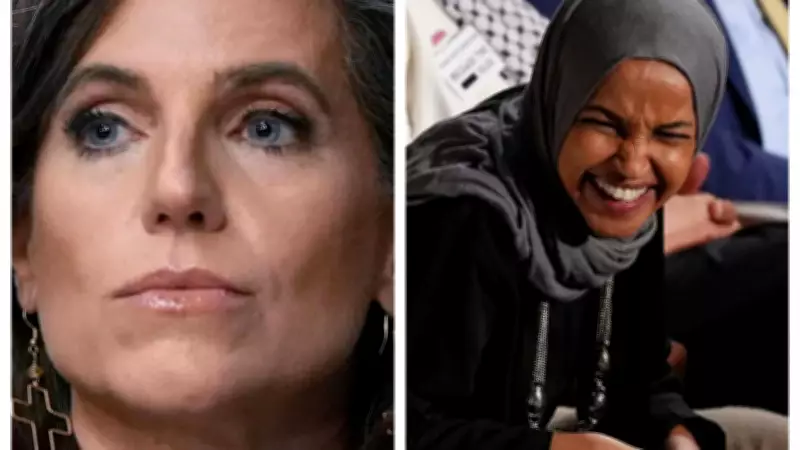
Congresswomen Ilhan Omar and Nancy Mace Clash Over US Strike on Iran
In a dramatic escalation of political tensions, US Congresswomen Ilhan Omar and Nancy Mace engaged in a sharp and cutting exchange following the United States' elimination of Iran's Supreme Leader Ayatollah Khamenei. The verbal confrontation unfolded on social media, revealing deep divisions over foreign policy and personal animosity between the lawmakers.
Mocking Remarks Spark Heated Response
The conflict began when Republican Congresswoman Nancy Mace posted what appeared to be mocking remarks directed at her Democratic colleagues Ilhan Omar and Rashida Tlaib. "Sending them thoughts and prayers," Mace wrote, in what many interpreted as sarcastic commentary targeting the two Muslim Congresswomen who have been vocal critics of US military intervention in the Middle East.
Ilhan Omar fired back with a blistering response that questioned Mace's sobriety and judgment. "I hope you aren't drunk and took your staff's advice," Omar wrote. "Rashida and I don't know this man and feel confident he didn't care about us. Please restrain from drinking too much as you have been warned from your staff and stay off social media when you are drunk. I pray in his holy month you find peace and respect for your self."

Grammar Correction Adds Fuel to Fire
Nancy Mace responded by proving she was not intoxicated and instead focused on correcting Omar's English. "Honey, it's 'please refrain' not 'please restrain.' This is what happens when your staff is from the Third World and can't speak proper English," Mace wrote, adding a controversial racial dimension to the already heated exchange.
Policy Disagreements Over US Military Action
The personal sparring occurred against the backdrop of serious policy disagreements regarding the US strike on Iran. Both Ilhan Omar and Rashida Tlaib issued strong condemnations of the military action.
Ilhan Omar's Statement: "Trump has launched an illegal regime change war. As someone who has survived the horrors of war, I know military strikes will not make us safer; they will inflame tensions and push the region further into chaos. When we abandon diplomacy, we choose destruction."
Rashida Tlaib's Statement: "He doesn't care about our loved ones in the military. He doesn't care about the fact that Americans don't want this war. He doesn't care about the Iranian people. He is corrupted. Don't fall for the lies."
Broader Regional Context
The congressional clash occurred as multiple developments unfolded across the Middle East:
- Iranian state media claimed a US fighter jet was downed in Kuwait, sharing video showing a fighter jet engulfed in flames with pilots ejecting
- Explosions were reported in Bahrain, Dubai, and Doha
- Israel conducted bombing raids on Hezbollah targets in Beirut
- Gulf nations vowed to defend themselves against potential threats
US Administration's Position
US Secretary of War Pete Hegseth addressed concerns about the conflict's duration on Monday, stating that the US war in Iran would not become endless like what happened in Iraq. He emphasized that the United States would not get bogged down in the conflict.
"Four weeks, two weeks, six weeks. It could move up, it could move back," Hegseth said regarding the US exit strategy, suggesting a flexible timeline for military engagement.
Political Implications
The exchange between Omar and Mace highlights several critical issues in contemporary American politics:
- The deep partisan divide over foreign policy and military intervention
- The personalization of political disagreements on social media platforms
- The intersection of identity politics with national security debates
- The challenge of maintaining civil discourse in an increasingly polarized environment
As tensions continue to escalate both internationally and domestically, this confrontation between prominent Congresswomen serves as a microcosm of broader conflicts within American politics regarding the nation's role in global affairs and the appropriate response to international crises.