

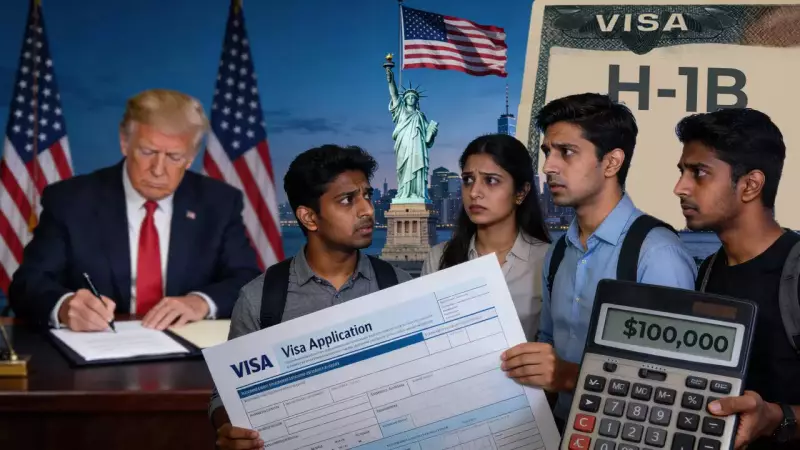
A significant legal development has emerged for Indian professionals and companies reliant on the H-1B visa programme. A federal district court in the United States has ruled that former President Donald Trump acted within his legal authority when he mandated a substantial new fee for certain H-1B visa applications.
Court Affirms Broad Presidential Powers on Immigration
The court's decision, delivered in the case of Chamber of Commerce of the United States of America v. US Department of Homeland Security, represents a major victory for the Trump administration's immigration policy. The judge concluded that the Immigration and Nationality Act (INA) grants the president "exceedingly broad" discretion to restrict the entry of noncitizens if deemed necessary for national interests.
The ruling specifically upheld a presidential proclamation requiring employers to pay an additional $100,000 fee before new H-1B visas can be processed. The judge found that President Trump supported the order with evidence suggesting the H-1B programme was subject to abuse, potentially harming American workers and raising national security concerns.

Business and Education Groups See Legal Challenge Rejected
The lawsuit was filed by powerful plaintiffs, including the Association of American Universities and the U.S. Chamber of Commerce, which represents approximately 300,000 businesses. They argued that the proclamation overstepped presidential authority under the INA and that implementing agencies failed to follow proper regulatory procedures.
The court rejected these arguments entirely. It stated that federal agencies "plainly do not act 'arbitrarily and capriciously'" when carrying out a lawful directive from the president. The judge noted that the Department of Homeland Security and the State Department had no choice but to implement the binding order.
Appeal Filed as Legal and Economic Fallout Continues
This ruling is the first decision among at least three ongoing lawsuits challenging the visa fee proclamation. Following the verdict, the plaintiffs have already filed a notice of appeal, indicating the legal battle is far from over.
Daryl Joseffer, Executive Vice President and Chief Counsel for the U.S. Chamber of Commerce, expressed strong disappointment. He told Higher Ed Dive that the $100,000 fee makes the H-1B visa "cost prohibitive," especially for small and medium-sized enterprises. Joseffer stated the Chamber is considering all legal options to ensure the programme functions as intended by Congress, allowing U.S. businesses to access vital global talent.
For the Indian tech community and numerous American companies that recruit from India, this ruling introduces significant uncertainty and potential financial burden. The appeal process will now determine the final outcome of this contentious immigration policy.






