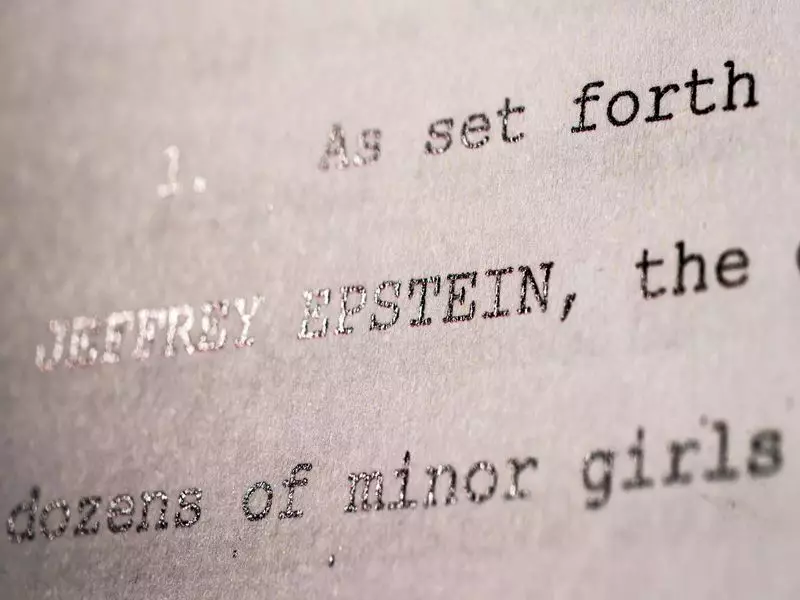
A group of influential Democrats in the United States House of Representatives has raised a serious legal alarm. They allege that the extensive redactions in recently released court documents related to the Jeffrey Epstein case might constitute a violation of federal law. This development adds a new layer of complexity to the ongoing public scrutiny surrounding the disgraced financier's network.
The Core Allegation: A Breach of Federal Rules
The controversy centres on documents unsealed earlier this year from a settled defamation lawsuit involving Ghislaine Maxwell, Epstein's former associate. While the release named numerous high-profile associates of Epstein, many details were blacked out. In a formal letter addressed to Judge Loretta A. Preska, who is overseeing the document release process, the Democratic lawmakers have now intervened.
Their primary argument is that the redactions may conflict with the Federal Rules of Civil Procedure. Specifically, they point to rules designed to protect public access to judicial records. The lawmakers contend that the presumption in federal courts is for openness, and the justification for sealing or heavily redacting information must be exceptionally compelling. They question whether the current level of censorship meets that high legal standard.

Democrats Push for Full Transparency
The letter, signed by Representatives Jerry Nadler, Jamie Raskin, and Alexandria Ocasio-Cortez, among others, is not a mere request but a pointed demand for accountability. The Democrats are urging Judge Preska to review the redactions with a much stricter lens. They want the court to ensure that any blacked-out information is narrowly tailored and absolutely necessary, such as protecting minor victims or ongoing law enforcement investigations.
The lawmakers emphasised the profound public interest in understanding the full scope of Epstein's sex trafficking ring. They argue that transparency is crucial for delivering a sense of justice to the survivors and for the public to have faith in the judicial system. The letter states that excessive secrecy only fuels speculation and undermines the credibility of the legal process.
Context and Broader Implications
This political move comes against a backdrop of intense global interest in the Epstein case. Jeffrey Epstein was arrested in 2019 on federal sex trafficking charges but died by suicide in a Manhattan jail cell before facing trial. His associate, Ghislaine Maxwell, was later convicted and is currently serving a 20-year prison sentence.
The release of the documents has already triggered widespread media coverage and public debate, naming several prominent figures from politics, business, and academia. However, the heavy redactions have led to frustration and calls for a more complete picture. The Democrats' intervention elevates this demand from the court of public opinion to the hallways of federal legal procedure.
The next steps now rest with Judge Loretta A. Preska. She must consider this formal challenge from sitting members of Congress. Her decision could lead to a new round of disclosures with fewer redactions, potentially revealing more names and details about the activities within Epstein's orbit. This legal tussle highlights the ongoing tension between privacy concerns, the rights of victims, and the public's right to know in one of the most infamous criminal cases of the modern era.