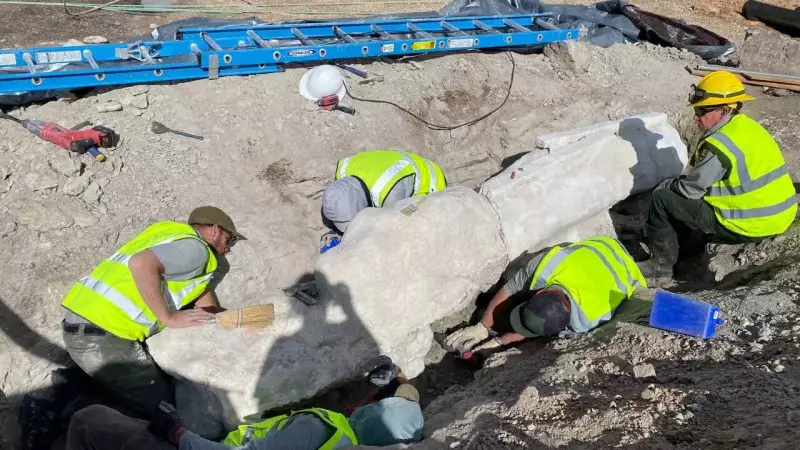
You never really expect to stumble across dinosaur bones while fixing up a parking lot, but that's exactly what happened at Dinosaur National Monument, located on the border of Colorado and Utah. Workers were just doing some routine upgrades near the Quarry Exhibit Hall when they hit a layer of sandstone packed with fossils. This remarkable discovery marks the first time anyone has found fossils at this site in more than a century, highlighting how even well-studied areas can still hold incredible prehistoric treasures waiting to be uncovered.
Unearthing Ancient Secrets During Routine Work
All of this kicked off on September 16, 2025. Crews started tearing up the old asphalt, and suddenly, they exposed bones that hadn't seen daylight since the early 20th century. The construction teams immediately stepped back so paleontologists could step in and carefully figure out what they had found, ensuring nothing got damaged in the process. This cautious approach allowed for the preservation of valuable scientific material that could provide new insights into the Late Jurassic period.
Identifying the Prehistoric Giant
According to the National Park Service, the bones likely belong to a large, long-necked dinosaur, most probably a Diplodocus, which is a common sauropod species from the Late Jurassic period. Teams, including park staff, volunteers, and the Utah Conservation Corps, worked diligently to remove roughly 3,000 pounds of rock and fossil material during the excavation. These fossils are now being cleaned and studied at the Utah Field House of Natural History State Park Museum in Vernal, Utah, with some pieces already on display at the Quarry Exhibit Hall for public viewing.

Why This Discovery Matters
This discovery is important for several key reasons that extend beyond the immediate excitement of finding dinosaur bones.
First Excavation in Over a Century
The site near the Quarry Exhibit Hall has not been excavated for fossils since 1924, making this occasion one of the rare and significant events in recent paleontological history. The long gap between discoveries underscores how much there is still to learn, even in areas that have been extensively researched.
Scientific Value and New Insights
New fossils offer additional data about dinosaur diversity, anatomy, and ecosystem dynamics in the Late Jurassic era, especially at a location already rich with well-preserved specimens. Each find like this helps scientists piece together a more complete picture of prehistoric life, contributing to our understanding of evolution and environmental changes over millions of years.
Public Engagement and Educational Opportunities
Visitors can watch fossil preparation in real time at the museum, giving the public a behind-the-scenes view of paleontology in action. This hands-on educational experience fosters greater appreciation for science and history, inspiring future generations of researchers and enthusiasts.
Dinosaur National Monument: A Fossil Hotspot
Dinosaur National Monument is best known for its 'Wall of Bones', which is a huge stretch of rock packed with about 1,500 dinosaur fossils, still right where they landed ages ago. This spot used to be an old riverbed, and over millions of years, dinosaurs and all kinds of other animals got buried and turned to stone here. That's why it's one of the top places in North America for Late Jurassic fossils. As researchers dig up and study more of these bones, they keep learning more about what life was like back then and what kind of world these ancient creatures called home.
The Significance of the Location
What really makes this discovery stand out is where it happened. The site sits right next to the legendary "Wall of Bones," a spot that's already taught us tons about dinosaurs from the Late Jurassic. Even after all these years and all that research, this place still had secrets to share, demonstrating the ongoing potential for new findings in established paleontological sites.