

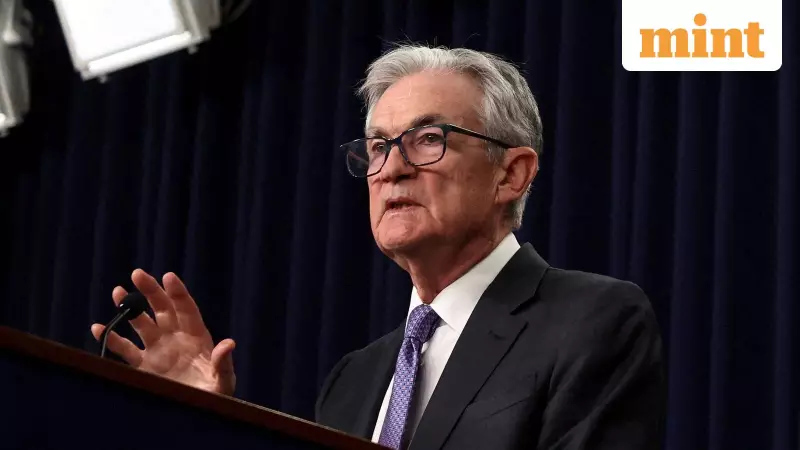
In a stunning development that threatens the bedrock independence of the US central bank, Federal Reserve Chair Jerome Powell has confirmed receiving grand jury subpoenas from the Department of Justice, a move he describes as a politically motivated escalation by the Trump administration.
An Unprecedented Legal Threat
Jerome Powell, in a forceful written and video statement released on Sunday, stated that the Justice Department's action is linked to his congressional testimony in June regarding the ongoing, costly renovations of the Fed's headquarters. However, he framed the legal threat within a broader campaign of pressure. "The threat of criminal charges is a consequence of the Federal Reserve setting interest rates based on our best assessment of what will serve the public, rather than following the preferences of the president," Powell asserted.
He emphasised the core issue at stake: "This is about whether the Fed will be able to continue to set interest rates based on evidence and economic conditions — or whether instead monetary policy will be directed by political pressure or intimidation." The investigation is being handled by the US Attorney’s Office for the District of Columbia.

Market Reaction and Political Backlash
The news sent immediate ripples through global financial markets. The US dollar weakened against all major currencies, while gold prices soared to a record high. Futures on the S&P 500 Index fell by 0.3%.
The subpoenas mark a dramatic new chapter in President Donald Trump's long-running feud with the Fed chair. Trump has frequently demanded aggressive interest rate cuts and has even discussed firing Powell. He has also taken the extraordinary step of seeking to remove Fed Governor Lisa Cook, a case the Supreme Court is set to consider later this month.
Republican Senator Thom Tillis, a member of the Senate Banking Committee, swiftly came to the Fed's defence. He stated he would "oppose the confirmation of any nominee for the Fed — including the upcoming Fed chair vacancy — until this legal matter is fully resolved." Tillis added, "If there were any remaining doubt whether advisers within the Trump administration are actively pushing to end the independence of the Federal Reserve, there should now be none."
The Renovation Controversy and Powell's Future
The subpoenas stem from a controversy that began last summer when the Trump administration intensified scrutiny over the Fed's renovation project. The cost for renovating two historic buildings had ballooned to an estimated $2.5 billion in 2025, up from $1.9 billion in 2023.
During his June testimony, Powell pushed back against claims of extravagance, such as a VIP dining room and roof gardens, stating some early features were no longer in the plans. Critics, including FHFA Director Bill Pulte, alleged Powell lied under oath, suggesting it could be legal "cause" for removal. Republican Representative Anna Paulina Luna had previously asked the DOJ to investigate.
Powell's term as chair expires in May, though his seat on the Board of Governors lasts until 2028. He has not indicated if he will stay on. Trump claims to have already chosen a successor, with NEC Director Kevin Hassett seen as a front-runner.
Analysts view the legal action as potential pressure for Powell to depart. Mark Spindel, author of a book on the Fed, called it "Trumpian vengeance and pressuring him to leave in May." The law states a president can only remove a Fed governor for cause, like inefficiency or neglect of duty.
The White House directed questions to the Justice Department, which did not immediately comment. This confrontation sets a perilous precedent for the separation of monetary policy from political influence, with global markets watching closely.






