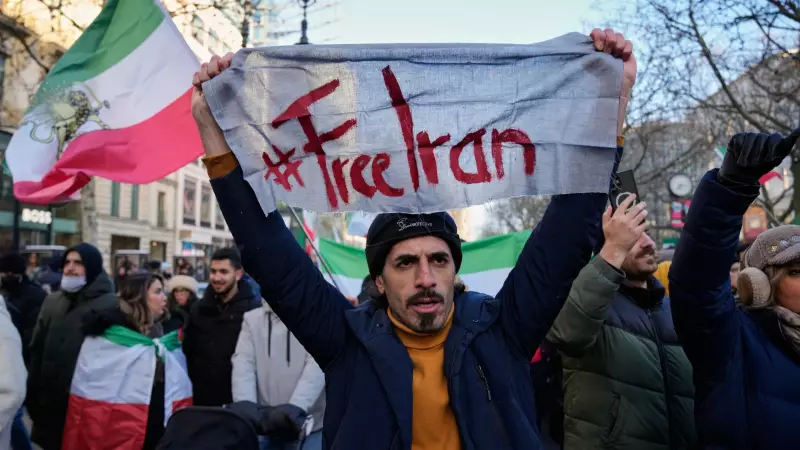
Former United States President Donald Trump has declared that America is prepared to support the people of Iran in their pursuit of freedom. His statement comes amidst a backdrop of ongoing civil unrest and protests within the Islamic Republic.
Trump's Public Declaration on Iran
In a recent public address, the former president made a pointed comment regarding the situation in Iran. "Iran is looking at freedom. They want freedom. And the United States stands ready to help them," Trump stated emphatically. He did not elaborate on the specific nature of the potential assistance the US might provide.
This intervention by Trump references the widespread protests that have periodically shaken Iran. These demonstrations were notably reignited following the tragic death of Mahsa Amini in September 2022. Amini, a young Kurdish-Iranian woman, died in custody after being arrested by the country's morality police for allegedly violating strict hijab laws. Her death became a powerful symbol of resistance against the regime's oppressive policies.

Context of the Protests and US Stance
The protest movement, often encapsulated by the slogan "Woman, Life, Freedom," represents one of the most significant challenges to Iran's theocratic leadership in years. While the initial spark was Amini's death, the grievances quickly expanded to encompass broader demands for political and social freedoms, as well as economic justice.
Trump's remarks align with a long-standing position of his administration, which took a notably hardline stance against Tehran. During his presidency, he unilaterally withdrew the US from the landmark 2015 nuclear deal, known formally as the Joint Comprehensive Plan of Action (JCPOA). His administration subsequently re-imposed crippling economic sanctions on Iran under a policy of "maximum pressure."
This approach was justified by the Trump administration as a means to curb Iran's nuclear ambitions and its support for militant proxy groups across the Middle East. Critics, however, argued that the sanctions disproportionately harmed ordinary Iranian citizens and did little to change the regime's behavior.
Implications and Regional Reactions
The former president's latest comments are likely to be viewed with deep suspicion by the Iranian government, which has consistently blamed the United States and other foreign powers for instigating unrest. Iranian authorities have framed the protests as a foreign-backed plot to destabilize the nation.
Trump's promise of help, while vague, underscores the continued centrality of Iran in US foreign policy debates. It also highlights the deep partisan divide in Washington regarding the optimal strategy for dealing with Tehran. The current Biden administration has pursued a different path, attempting to revive the nuclear deal through diplomacy, though these efforts have largely stalled.
For the protest movement within Iran, international statements of support are a double-edged sword. While they provide moral encouragement and global visibility, they also offer the Iranian government propaganda fodder to discredit the protests as being orchestrated by external enemies.
The situation remains fluid and tense. The fundamental call for change from within a significant segment of Iranian society persists, setting the stage for continued friction between the populace and the ruling establishment. Trump's re-entry into this complex geopolitical discourse signals that Iran will remain a hot-button issue in American politics.