The True Danger Posed by Donald Trump: A Global Analysis
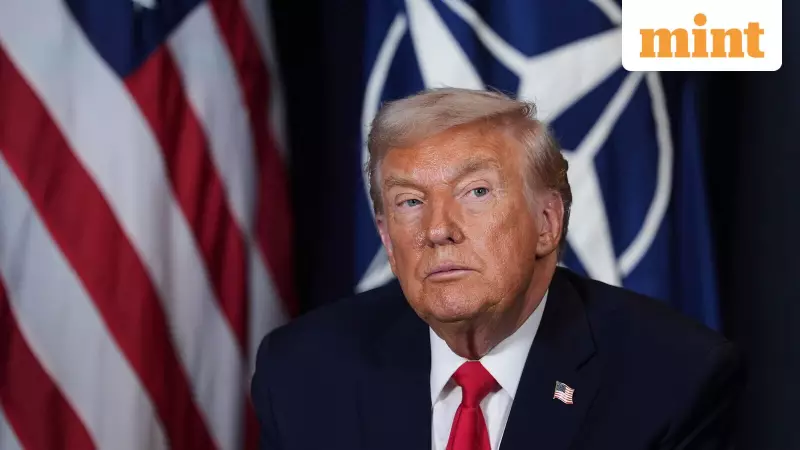
President Donald Trump's recent actions and rhetoric, particularly during his meeting with NATO Secretary General Mark Rutte at the World Economic Forum in Davos, Switzerland, have sparked widespread concern among global allies. While a tactical retreat on issues like Greenland tariffs may offer temporary relief, the underlying risks to international stability remain profound and far-reaching.
Greenland Crisis: A Tactical Retreat with Long-Term Implications
In Davos, President Trump's demand for "right, title and ownership" of Greenland was met with a surprising conciliatory tone, as he abandoned tariffs and ruled out the use of force, later hailing new "framework" talks. This shift eased a crisis that threatened to engulf the transatlantic alliance, but it raises critical questions about the durability of such reprieves. Mr. Trump has coveted Greenland for years, and his contemptuous remarks about NATO during this episode should put European capitals on high alert.
The Greenland incident holds several key lessons for countries worldwide. Firstly, Mr. Trump has demonstrated a willingness to buckle under pressure without necessarily surrendering his long-term objectives. Secondly, his narrow, pessimistic worldview and readiness to rewrite history have significantly eroded the trust that once underpinned America's alliances. Lastly, every disagreement under his administration threatens to become existential, portending a global realignment that allies must prepare for.

NATO and Transatlantic Trust: Eroding Foundations
Europe was fortunate in the Greenland crisis, as Mr. Trump chose to pick a fight over a prize of minimal strategic value to America. He argues that the Arctic will be contested as melting ice opens it to global navies, and that owning Greenland would deter Russia and China from striking it. However, Greenland already hosts an American base and is protected by NATO's Article 5, with Denmark offering to strengthen existing treaties. The additional benefit of territorial control is negligible.
This situation helped Europeans convince Mr. Trump that the potential costs outweighed the benefits. Threats of retaliation from European countries, market concerns over trade wars, and public opinion against a costly takeover, combined with rare Congressional resistance, forced a retreat. The moral is clear: to make America's president back down, allies must impose a tangible price on him.
In Davos, Mr. Trump's continued talk of owning Greenland suggests he could revive tariffs or force threats for leverage. Even if negotiations with Denmark yield a revised treaty short of sovereignty, his speech betrayed deep contempt for Europe and the transatlantic alliance. He claimed America has paid "100%" for NATO without receiving anything in return, with Treasury Secretary Scott Bessent griping about $22 trillion in defense spending since 1980. This narrative is a travesty of NATO's history and Europe's future.
Preparing for a World Without American Leadership
Mr. Trump's view of allies as spongers and shared values as irrelevant is unlikely to change, leading to further confrontations over issues like Greenland or others. America's friends in Europe and beyond must prepare for a world where they stand alone. This starts with preserving as much of NATO as possible, but building hard power takes years, and Mr. Trump is in a hurry.
The problem is compounded by Mr. Trump's belief that America holds all the cards, as allies have more to lose from a rift. He is partly right; for instance, if America withdrew support for Ukraine, it could hasten defeat and further Russian aggression. Europe and Asia depend on America for military equipment, with America providing 40% of NATO's capacity, and for vital services and digital technologies.
Europe should counter this by exposing the shallowness of such thinking. It can inventory what America stands to lose, including a $1 trillion market for American goods and services, essential technologies in chipmaking and telecoms, and valuable intelligence from European spies. Greenland is just the tip of the iceberg; Europe must warn Americans about the hostile world Mr. Trump is creating, where rearmament, nuclear proliferation, and conflicts could ensue.

Conclusion: Navigating an Uncertain Future
Investors, voters, and Congress must focus not only on Europe's vulnerabilities but also on the harm America itself could suffer from Mr. Trump's policies. Unfortunately, America's alliances cannot survive continual arm-wrestling under a president who devalues allies. Internally, Europe may face disunity as countries seek varying accommodations with a predatory America. Externally, leaders like Vladimir Putin and Xi Jinping will exploit divisions.
In past decades, American protection has coddled Europeans, allowing a focus on the good life rather than hard power. Those times are over. European leaders must strive to slow the erosion of the transatlantic alliance while preparing for a future where NATO may no longer exist. The true danger posed by Donald Trump lies not in isolated incidents like Greenland, but in the systemic unraveling of global trust and cooperation.