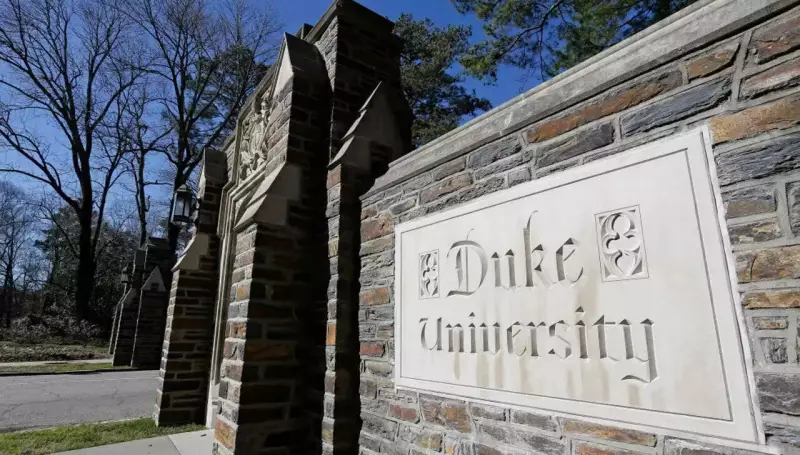
Duke University in the United States has implemented sweeping austerity measures, slashing a staggering $299 million from its expenditure. This decisive action comes as a direct response to significant reductions in federal funding from the US government, a nationwide trend impacting universities and research institutions.
Federal Policy Shifts Trigger Financial Crisis
The financial pressures stem from policy changes following President Donald Trump's inauguration, which reshaped federal support for academia and research. A critical move was the administration's attempt in February to cap Facilities and Administrative (F&A) reimbursement rates for major grants. The proposal aimed to limit these rates to 15%, a dramatic drop from the previous 60%, though this remains contested in court.
For Duke University, this single change threatened an annual loss of approximately $194 million. Faced with this looming deficit, University President Vincent Price announced an urgent cost-reduction strategy. The plan included an immediate hiring freeze, comprehensive administrative reviews, and cuts to non-personnel spending. Price emphasized that the institution must adapt to a new reality of diminished federal support and can no longer depend on past levels of funding.

Voluntary Buyouts and Involuntary Layoffs Implemented
By April, university administrators warned that employment actions were unavoidable. They subsequently launched a Voluntary Separation Incentive Programme, offering buyout packages to eligible staff across various departments. The initiative saw a significant uptake: out of 939 staff offered the package, 599 accepted. This represented about 5% of Duke's full-time workforce.
However, voluntary measures were not enough. By September, the university confirmed 45 involuntary layoffs. President Price stated that Duke would have to operate with a smaller workforce for the foreseeable future. The impact extended to faculty as well, where a retirement incentive programme attracted 82 participants from 273 eligible academics. Additionally, the School of Medicine proposed salary reductions for underperforming tenured staff.
Campus Impact and Long-Term Strategic Realignment
The cost-cutting had a tangible impact on campus life and infrastructure. The School of Medicine decommissioned the Jones Research Building as part of its plan to cut $125 million in annual expenses linked to reduced National Institutes of Health (NIH) funding. Students returning to campus encountered fewer academic advisers and reduced library support services.
Despite the challenges, the aggressive measures have altered the university's financial trajectory. Finance leaders now project a $74 million surplus for the fiscal year 2026. According to reports, administrators believe the cost-cutting has positioned the university more strongly for the future. The focus is now shifting towards strategic realignment—reallocating saved resources into priority areas while managing a leaner institution. This direction consolidates months of savings into a coherent, long-term financial plan for Duke University's future.