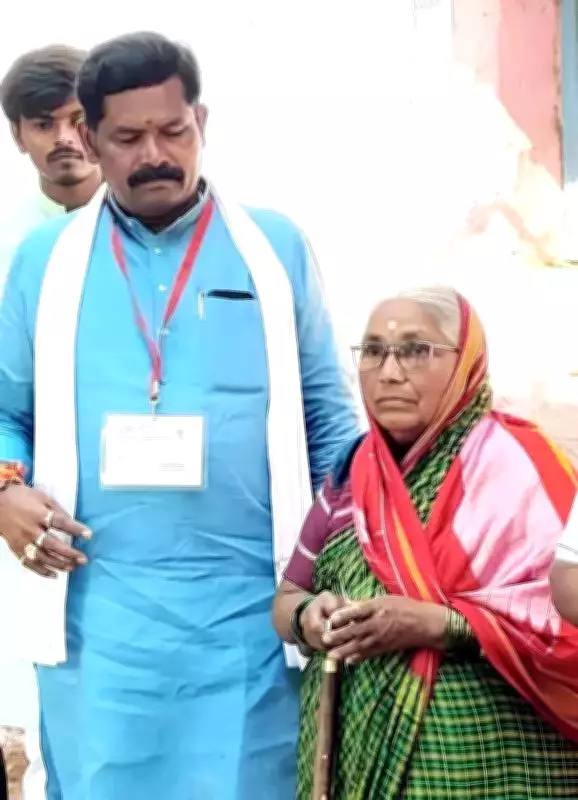
Elderly Woman's Land Donation Transforms Government School Prospects in Koppal
In a remarkable display of community spirit and personal commitment to education, an octogenarian woman from Karnataka's Koppal district has made a significant contribution to her local government school. Huligemma, the 80-year-old mother of district minister Shivaraj Tangadagi, has donated one full acre of her personal land to the Government Primary School in Aadapur village, located in Navali hobli of the Kanakagiri assembly constituency.
A Personal Mission Born from Childhood Regret
The inspiration behind this generous act stems from Huligemma's own life experiences. Having been denied formal education during her childhood due to prevailing circumstances, she carried this regret throughout her life. This personal history made her particularly sensitive to educational infrastructure challenges in her community.
The Aadapur government school currently serves approximately 120 students with just seven rooms, including a kitchen facility. The institution has been struggling with multiple infrastructure deficiencies, including inadequate classroom space, insufficient playground area, and limited scope for expansion. These shortcomings had become such a pressing concern for local residents that villagers from Aadapur had even threatened to boycott the last assembly elections to protest what they perceived as official neglect of their educational needs.

Strategic Land Donation Despite Rising Property Values
What makes Huligemma's donation particularly noteworthy is the timing and location of the gifted property. Land prices in and around Aadapur have seen substantial appreciation due to the establishment of the nearby Rice Tech Park, making her one-acre contribution even more valuable. Despite this market reality and her family connections to political leadership, Huligemma insisted that this contribution remain entirely her personal initiative, free from political influence or routing.
Her son, Minister Shivaraj Tangadagi, fully supported his mother's decision while ensuring the gesture remained authentically hers. He recognized the school's urgent need for additional space and improved infrastructure, acknowledging that his mother's donation could address these critical requirements.
Legal Formalities and Official Recognition
To formalize her generous contribution, Huligemma personally visited the Karatagi sub-registrar's office on February 2nd to complete all necessary legal procedures. The land, identified as survey number 86/1/9, was officially registered in the name of the governor before being handed over to Gangavathi Block Education Officer HB Natesh.
BEO Natesh praised Huligemma's exemplary concern for public education, noting that her donation would significantly strengthen the school's infrastructure and particularly benefit children from economically weaker sections of the community. The long-term vision includes potential expansion that could allow the primary school to eventually upgrade to a high school, providing continuous educational opportunities for local children.
Inspiring a Tradition of Educational Philanthropy
Huligemma's act follows a growing trend of individual contributions to government educational institutions in Karnataka. Earlier, Huchchamma Chaudri of Kunikeri village in Koppal taluk had drawn statewide attention by donating two acres of land to a government school in her village. Huligemma's gesture reinforces this pattern of community-driven educational support, demonstrating how personal initiative can complement government efforts in strengthening public education infrastructure.
The elderly woman's story resonates beyond the immediate benefits to Aadapur school. It represents a powerful narrative of turning personal regret into community benefit, of using available resources to create opportunities for future generations, and of maintaining personal agency even within influential family networks. Her action serves as an inspiring example of how individual citizens can make meaningful contributions to public welfare, particularly in the crucial domain of education where infrastructure gaps often hinder learning outcomes.