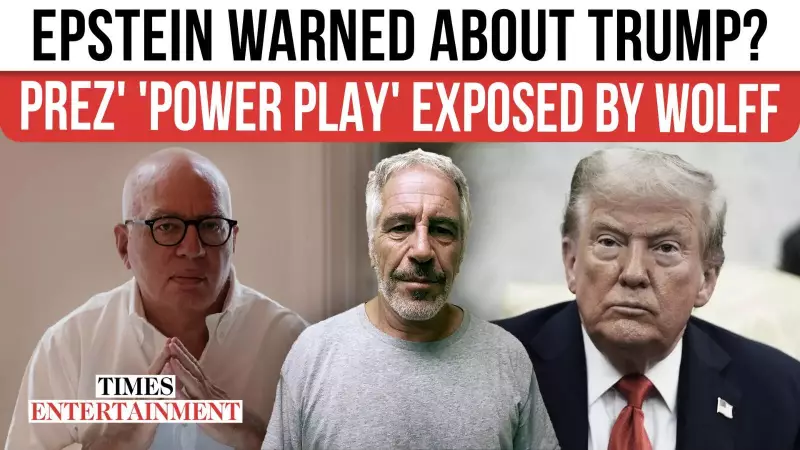
Author Michael Wolff has dropped a bombshell revelation, claiming that the late financier and convicted sex offender Jeffrey Epstein privately predicted that Donald Trump would treat the sacred presidential pardon power as his personal plaything. This eerie warning, Wolff asserts, has now manifested in reality.
Epstein's Chilling Prophecy on Presidential Power
According to Wolff's explosive claims, Epstein foresaw Trump's approach to one of the most significant powers of the American presidency. The author states that Epstein characterized Trump's potential attitude towards pardons as "childlike" and obsessed with wielding power for personal gratification, akin to treating them like "power props" or toys. This private warning, allegedly made before Trump's presidency, is now being presented as a prescient observation of his future conduct in office.
From Prediction to Reality: The Pardon Spree
Wolff points to specific actions by Trump to substantiate the claim that Epstein's warning has come true. The most prominent example cited is Trump's pardoning of over 1,500 individuals involved in the January 6 Capitol riot. This mass clemency, unprecedented in scale for such events, is framed as a demonstration of using the pardon authority for political and personal allegiance.

Furthermore, Wolff highlights Trump's public musings about granting clemency to Ghislaine Maxwell, Epstein's former associate who was convicted for her role in facilitating his abuse. While no pardon was ultimately granted, the mere public flirtation with the idea is presented as evidence of Trump's transactional and provocative approach to this executive power.
Denials and Growing Controversy
Unsurprisingly, these claims have been met with firm denial from Trump's camp. Representatives from the former president's team and the White House have dismissed Wolff's revelations. However, the story has ignited a fresh firestorm in the media, adding another layer to the complex and controversial legacy of Trump's use of presidential pardons.
The implications are significant, suggesting a fundamental shift in how this constitutional tool is perceived and utilized. Critics argue it moves the pardon power away from an instrument of mercy or justice correction and towards a mechanism of political reward and personal whim.
Wolff, known for his insider accounts of the Trump White House, has once again placed himself at the centre of a major political narrative. The revelations, tied to the infamous figure of Jeffrey Epstein, ensure the story carries a potent mix of political intrigue and scandal, guaranteeing it will resonate loudly in the current American political discourse.