

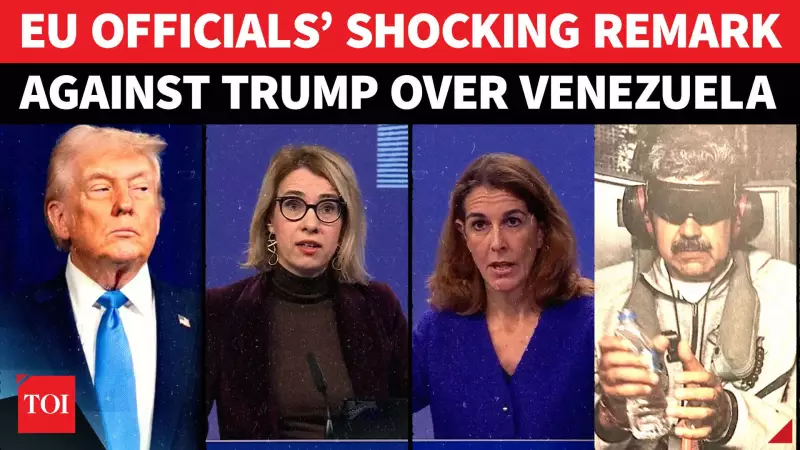
International diplomatic tensions have reached a boiling point following a bold military operation in Venezuela ordered by former US President Donald Trump. The move, coupled with his claim that the United States "will run Venezuela," has sent shockwaves across global capitals, with European Union officials visibly frustrated and struggling to formulate a coherent response.
EU's Evasive Stance and Rising European Anger
At a recent press briefing, European Union representatives faced intense scrutiny from journalists regarding the democratic implications of the US intervention. Instead of providing a clear stance, officials bluntly deflected the tough questions. They told reporters to "ask Trump" about his true intentions, revealing a deep sense of exasperation and strategic confusion within the bloc. This evasive response highlights the significant diplomatic rift opened by Washington's unilateral action. Reports indicate that anger and concern are spreading rapidly among European member states, who view the operation as a destabilising challenge to the international order.
Denmark's Crisis and the World on Alert
The fallout extends beyond Venezuela's borders, triggering immediate alarm in Northern Europe. Denmark has reportedly shifted into "crisis mode" as the United States redirects its strategic gaze towards Greenland, a vast autonomous territory within the Danish realm. This sudden US interest has sparked fears of a new geopolitical flashpoint. Meanwhile, in Venezuela, the central figures of the operation are now in custody. President Nicolás Maduro was captured alongside his wife, marking a dramatic turn in the country's prolonged political crisis. The world watches with acute alarm as these events unfold, uncertain of the next domino to fall.

A Global Order Under Stress
Trump's audacious moves have ignited multiple diplomatic firestorms simultaneously. The capture of a sitting head of state, the explicit ambition to control a sovereign nation's affairs, and the sudden pressure on a NATO ally like Denmark collectively represent one of the most severe tests of the post-war international system in recent years. Analysts suggest that the EU's frustrated response underscores a broader powerlessness felt by traditional powers in the face of unpredictable, unilateral American action. The coming days will be critical in determining whether global institutions can manage this crisis or if a more profound realignment of international relations is underway.






