

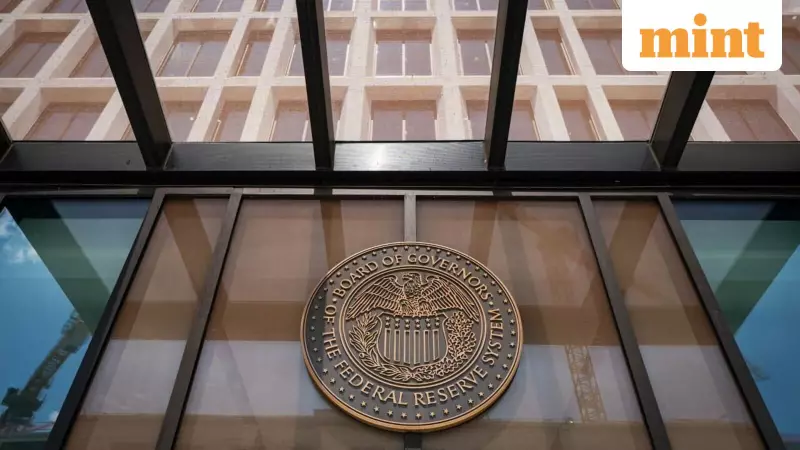
The US Federal Reserve remains deeply divided on the path for interest rates in 2025, with policymakers split over the timing and extent of further cuts, according to the official record of its December meeting. The minutes, released on Tuesday, underscore the delicate balancing act the central bank faces as it navigates between cooling inflation and a softening labour market.
A Finely Balanced Decision
The document from the December 9-10 Federal Open Market Committee (FOMC) gathering revealed that the decision to cut rates was far from unanimous. The committee voted 9-3 to lower the benchmark federal funds rate by a quarter percentage point, marking the third consecutive reduction and bringing it to a target range of 3.5% to 3.75%.
However, the minutes noted that "a few of those who supported lowering the policy rate at this meeting indicated that the decision was finely balanced." Some officials even stated they could have supported keeping rates unchanged. This internal rift was evident in the dissenting votes: Governor Stephen Miran favoured a larger half-point cut, while Chicago Fed President Austan Goolsbee and Kansas City's Jeff Schmid wanted no cut at all.

Projections Point to Wider Rifts Ahead
The division extends beyond the immediate decision into forecasts for the coming year. Among the 19 policymakers who submit longer-term projections, a significant group opposed the December move. Six officials projected the benchmark rate should be at 3.75% to 4% by the end of 2025, effectively arguing against the cut implemented in December.
The minutes stated that some officials believed "it would likely be appropriate to keep the target range unchanged for some time" after the December reduction. While the median official projection points to one more quarter-point cut in 2026, individual forecasts varied widely, contrasting with investor expectations of at least two reductions in the coming year.
The Core Debate: Inflation vs. Labour Market
The minutes highlight the fundamental debate at the heart of the Fed's dilemma. On one side, most participants argued that moving toward a more neutral policy stance would help prevent a major deterioration in labour market conditions. The unemployment rate rose to 4.6% in November, its highest level since 2021.
On the other side, several policymakers warned of the risk that high inflation could become entrenched. They cautioned that cutting rates further amid elevated price pressures "could be misinterpreted as implying diminished policymaker commitment to the 2% inflation objective." This split was complicated by a lack of data due to the government shutdown in October and part of November.
Since the December meeting, new economic data has provided mixed signals. While softer consumer price increases and higher unemployment bolstered the case for rate cuts, strong third-quarter GDP growth of 4.3% likely fuelled inflation concerns for hawkish officials. The release of the minutes slightly reduced market expectations for a January rate cut, with futures contracts pricing the probability at around 15%.
Analysts interpreted the December outcome as a demonstration of Chairman Jerome Powell's influence. Stephen Stanley, chief US economist at Santander US Capital Markets, noted, "The Committee could easily have gone either way, and the fact that the FOMC eased is clear evidence that Chairman Powell pushed for a cut." The path forward remains highly data-dependent, with the deeply divided Fed seeking clearer signals on the economy's trajectory.






