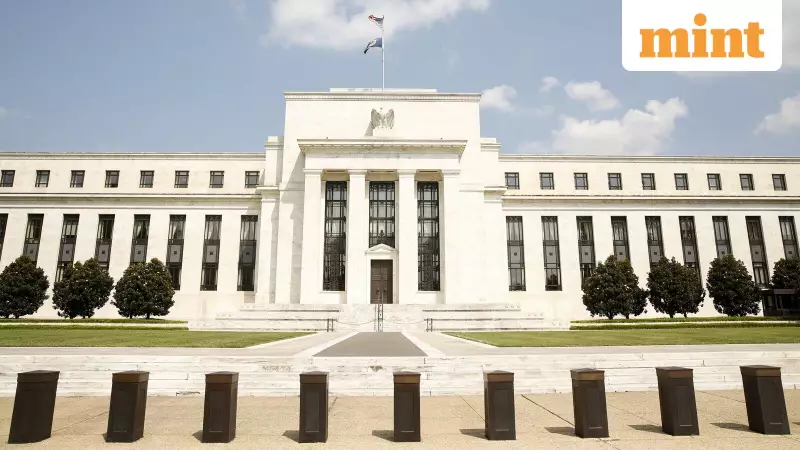
The greatest danger to the autonomy of the US Federal Reserve is not political attacks or legal challenges, but its own gradual transformation from a lender of last resort to a lender of immediate resort. This shift, argues Stanford finance professor Amit Seru, blurs crucial lines, encourages moral hazard, and ultimately weakens the Fed's ability to conduct effective monetary policy.
The Erosion of a Century-Old Principle
The cornerstone of responsible central banking was laid by Walter Bagehot over 150 years ago: lend freely in a crisis, but only to solvent institutions, against good collateral, and at a penalty rate. This elegant framework clearly separated roles: the central bank provided liquidity, fiscal authorities handled solvency, and markets enforced discipline.
However, Seru contends that this principle has been steadily eroded through successive crises—the 2007-08 financial meltdown, the 2020 Covid-19 shock, and the 2023 regional banking turmoil. With each event, the Fed expanded the scope, scale, and frequency of its interventions. What began as extraordinary emergency measures have morphed into routine market management tools.

The key distinction between illiquidity and insolvency has become dangerously blurred. Illiquidity is a short-term funding problem a central bank can fix. Insolvency, reflecting deep balance-sheet weaknesses, requires equity, mergers, or resolution—a job for markets and fiscal authorities.
Mission Creep and the 2023 Banking Turmoil
The 2023 crisis involving mid-size banks starkly illustrated the risks of this mission creep. Research by Seru and his colleagues revealed that hundreds of banks were sitting on large unrealised losses from long-duration assets, had thin capital buffers, and depended heavily on uninsured deposits.
Despite these clear solvency concerns, the episode was widely framed as a liquidity crisis. The Fed's response, including new lending facilities, effectively extended its safety net to cover roughly $9 trillion in uninsured deposits. This action, while calming markets, failed to address the underlying interest-rate risk and left perverse incentives intact, setting the stage for future instability.
This creates a profound conflict for the Fed. As both bank supervisor and monetary authority, admitting supervisory failure or concealed solvency issues is politically difficult. The easier path is to label problems as liquidity-based, leading to a pro-intervention bias that contradicts the purpose of central bank independence.
Protecting Independence Through Restraint and Clarity
To safeguard its credibility and operational freedom, Seru proposes a return to—and modernisation of—Bagehot's principles. The Fed must re-establish clear boundaries:
- Set transparent, pre-defined conditions for activating emergency facilities.
- Publish strict eligibility rules limiting support to solvent institutions.
- Impose robust penalty rates and collateral haircuts.
- Publicly disclose facility usage details after they are closed.
- Most critically, limit itself strictly to liquidity support and force solvency issues back to markets.
A crucial automatic mechanism is needed: institutions receiving liquidity aid should be mandated to raise equity equivalent to that support within a set timeframe, or face restructuring. If private markets refuse to provide capital, it signals the institution is insolvent, not illiquid.
"A central bank that cannot refuse intervention during a crisis cannot be expected to hold its ground when tightening monetary policy," Seru concludes. By resisting the urge to treat every disruption as systemic, the Fed can protect its legitimacy. Otherwise, its credibility will erode with each rescue of an institution that should have been allowed to fail, leaving the financial system fragile by design.