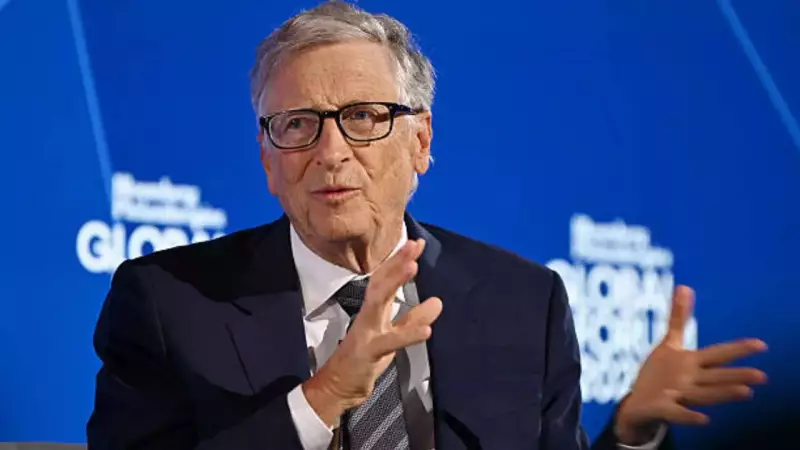
In a stark caution to the Trump administration, billionaire philanthropist Bill Gates has stated that significant reductions in United States funding for global health initiatives could hold America responsible for a potential increase in childhood deaths this century. This warning comes amid projections of rising mortality rates among children under five.
A Dire Warning on Funding Cuts
Gates revealed that he personally conveyed to President Donald Trump that while modest efficiency-driven cuts of 10-20% might be acceptable, reductions beyond that threshold would assign the US "some culpability in the increase in deaths." According to Gates, the President responded favorably to the discussion. However, Gates added a note of concern, stating, "but we don't have a plan to get the spending all back in place."
The urgency of this message is underscored by new modeling data. The annual Goalkeepers report from the Bill & Melinda Gates Foundation projects that 4.8 million children will die before their fifth birthday in 2025. This figure represents an increase of over 200,000 from the previous year. The report presents an even grimmer long-term forecast: if funding cuts persist at a level of 20%, an additional 12 million children could die by 2045.

Global Retreat and Its Immediate Impact
The issue extends beyond the United States. There has been a significant international retreat from global health aid, with funding plummeting by almost 27% this year. This drastic drop has devastated programs that rely on consistent international support. While the Trump administration's dismantling of USAID structures has drawn considerable attention, major European donors like the United Kingdom, France, and Germany have also dramatically slashed their spending.
The consequences of these cuts are already materializing on the ground. Gates cited a stark example from Nigeria, where donor-funded tuberculosis programs that once employed more than 8,000 health workers have been terminated. He warned that this single disruption in one country could lead to tens of thousands of additional deaths from tuberculosis alone.
Emphasizing the value of proven interventions, Gates highlighted that routine vaccination remains the most cost-effective health measure, with every dollar invested yielding $54 in economic benefits. However, he noted that this progress is being threatened globally by vaccine skepticism, a movement promoted by figures like US Health Secretary Robert F. Kennedy Jr.
Philanthropy Cannot Fill the Government Gap
In response to the evaporating government support, the Gates Foundation has announced plans to double its own spending over the next two decades. Despite this significant commitment, Gates stressed that private philanthropy cannot compensate for the scale of the US government's pullback. He pointed out that for poor African nations, the journey to achieving healthcare self-sufficiency is a long-term endeavor, describing it as a "20-year goal, not a four-year one."
While expressing some guarded optimism about certain elements of the State Department's new global health strategy, Gates acknowledged the prevailing uncertainty. "I do think that Congress cares and President Trump cares," he said, "but we still don't have a full resolution of what the funding flows will look like." The path forward for international health aid, crucial for saving millions of young lives, remains unclear as nations reconsider their global commitments.