

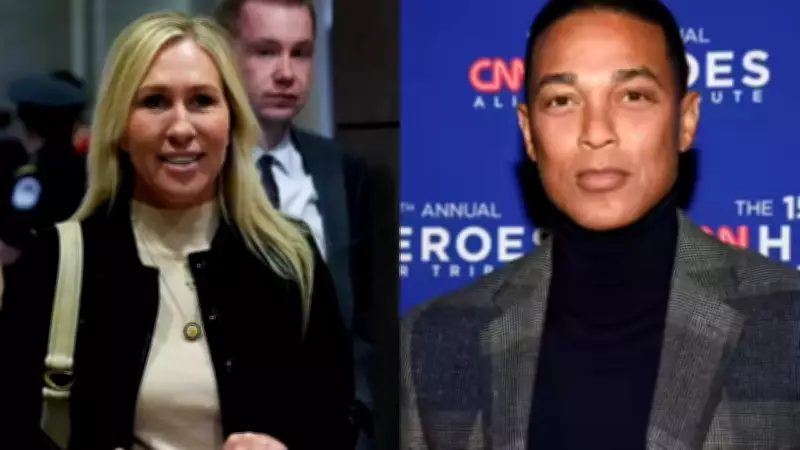
In a striking defense of federal authorities, former Congresswoman Marjorie Taylor Greene has publicly endorsed the controversial arrest of ex-CNN journalist Don Lemon, asserting that his actions during a recent protest constituted activism rather than protected press activity. Greene's comments, delivered during a Friday appearance on Real Time with Bill Maher, have ignited fresh debate about the boundaries of journalism and First Amendment protections in the United States.
Greene's Controversial Stance on Press Freedom
During the televised panel discussion, Greene emerged as one of the few prominent figures to openly support the federal indictment against Lemon, which has drawn widespread criticism from press freedom advocates and civil liberties organizations. The former lawmaker argued vigorously that Lemon's conduct during an anti-Immigration and Customs Enforcement (ICE) protest in Minnesota exceeded legitimate journalistic activity.
The Legal Basis for Lemon's Arrest
Federal agents in Los Angeles recently took Lemon into custody, charging the independent journalist with civil rights violations including conspiracy to deprive civil rights and interfering with religious freedom. The charges stem from Lemon's coverage of an anti-ICE demonstration that disrupted a church service in St. Paul, Minnesota earlier this month.

Prosecutors allege that Lemon's involvement went beyond mere reporting and amounted to active participation in the protest, which they claim interfered with worshippers' constitutional rights. According to court documents, authorities believe Lemon crossed the line from observer to participant during the incident.
Greene's Specific Allegations
During her appearance on Maher's program, Greene specifically cited the Freedom of Access to Clinic Entrances (FACE) Act as justification for Lemon's arrest. This federal law is designed to protect religious exercise at places of worship. "He went into a church, disrupted their worship and then later in an interview compared them to white supremacists," Greene stated emphatically. "That's not journalism, that's activism."
The former congresswoman further asserted that Lemon's presence alongside protesters constituted harassment of churchgoers, suggesting that children present during the incident were particularly distressed. These claims have drawn skepticism from media commentators and legal experts who question their evidentiary basis.
Broader Implications for Journalism
Greene's stance represents a rare moment of support for the Justice Department's controversial prosecution in a case that has alarmed press freedom advocates nationwide. Media organizations and civil liberties groups warn that such charges could establish dangerous precedents that might suppress independent journalism and chill investigative reporting.
During the panel discussion, host Bill Maher questioned the justification for arresting a journalist for covering such events, suggesting the government's actions might constitute overreach. However, Greene countered these concerns by maintaining that the First Amendment does not protect what she characterized as activist behavior disguised as journalism.
Lemon's Response and Legal Position
Don Lemon, who was released on a personal recognizance bond following his arrest, has vowed to continue his reporting and defend his actions in court. In statements to Fox News, Lemon emphasized his belief that the First Amendment protects his work as a journalist. "The First Amendment of the Constitution protects that work for me and for countless other journalists. I will not be silenced," Lemon declared.
The journalist maintains that his presence at the protest was solely for reporting purposes and that he was exercising his constitutional rights as a member of the press. Legal experts anticipate that this case may become a significant test of how courts interpret the boundaries between journalistic activity and political activism.

National Debate Intensifies
This controversy has sparked intense national discussion about the proper limits of press freedom in an increasingly polarized media landscape. Supporters of Greene's position argue that journalists must maintain objectivity and avoid crossing into advocacy, while press freedom advocates contend that aggressive reporting on contentious issues sometimes requires close proximity to events that authorities might misinterpret as participation.
The case continues to develop as both sides prepare for legal proceedings that could have lasting implications for how journalists cover protests and how law enforcement distinguishes between reporting and participation in potentially disruptive events.





