Gulf Allies Voice Growing Frustration with US Over Iran Conflict Handling
The Trump administration is encountering escalating frustration from its key allies in the Gulf region, who assert they were not sufficiently warned about the magnitude of Iranian retaliation following coordinated US-Israeli strikes on Tehran, as reported by the Associated Press. Officials from two Gulf countries have expressed deep disappointment with Washington's management of the conflict, particularly regarding the initial attack on Iran last Saturday.
Lack of Advance Notice and Ignored Warnings
According to sources cited by AP, Gulf officials claimed their governments did not receive advance notice of the US-Israeli strikes. They further alleged that the United States disregarded their warnings that such military actions could provoke widespread retaliation across the Middle East. This lack of communication has fueled tensions, with allies feeling sidelined in critical decision-making processes.
One official emphasized that Gulf governments are increasingly frustrated because the US military response appears predominantly focused on defending Israel and American forces, while leaving regional partners to grapple with the consequences of Iranian attacks. This perception has heightened concerns about the strategic priorities of the Trump administration in the ongoing conflict.

Strained Air Defenses and Depleting Resources
The official also highlighted growing regional anxiety over air defense systems being stretched thin. He noted that his country's stock of interceptors is rapidly depleting, raising alarms about the sustainability of defensive measures against continued Iranian assaults. This resource strain underscores the broader security challenges faced by Gulf nations as the conflict intensifies.
White House Defense and Regional Dynamics
In response to the criticism, White House spokeswoman Anna Kelly defended the US military campaign, dubbed Operation Epic Fury. She asserted that the strikes have significantly weakened Iran's ability to retaliate, citing a 90% decrease in Iran's ballistic missile attacks. Kelly stated, President Trump is in close contact with all of our regional partners, and the terrorist Iranian regime's attacks on its neighbours prove how imperative it was that President Trump eliminate this threat to our country and our allies.
Meanwhile, Prince Turki al-Faisal, the former Saudi intelligence chief, suggested that Israeli Prime Minister Benjamin Netanyahu played a pivotal role in drawing the United States into the conflict. He told CNN, This is Netanyahu's war. He somehow convinced the president (Trump) to support his views. This comment reflects underlying regional suspicions about external influences on US policy.
Iran's Retaliation Spreads Across the Gulf
Iran's retaliatory campaign has increasingly targeted Gulf countries that host American troops and critical infrastructure. Since the conflict began, Tehran has launched barrages of missiles and drones at five Gulf Arab nations, including:
- Dubai
- Kuwait
- Bahrain
- United Arab Emirates
- Qatar
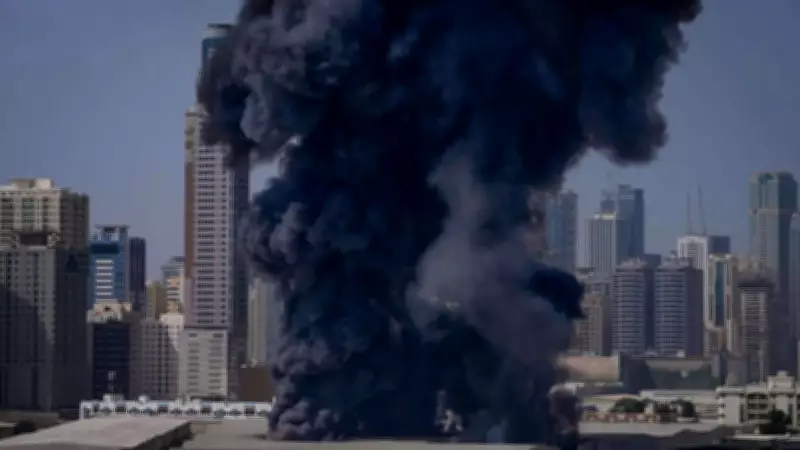
Explosions and interceptions have been reported near major urban centers such as Dubai and Abu Dhabi, leading to airspace restrictions and flight disruptions at some of the world's busiest aviation hubs. These incidents have stranded passengers and forced airlines to reroute services, causing significant economic and logistical turmoil.
Mixed Feelings and Broader Concerns
Michael Ratney, a former US ambassador to Saudi Arabia, noted that Gulf countries harbor mixed emotions about the war. While many would welcome a weakened Iran, they remain deeply apprehensive about the broader economic and security repercussions. Ratney, now a senior adviser at the Center for Strategic and International Studies, remarked, What comes next? The countries of the Gulf will have to bear the brunt of whatever that is.

The conflict between Iran on one side and the United States and Israel on the other has now entered its seventh day, with both sides continuing to exchange strikes across the Middle East. Iranian forces have launched hundreds of missiles and drones at US assets and allied states in the Gulf, while US and Israeli forces have intensified attacks on Iranian military infrastructure. This escalation raises fears that the fighting could widen into a broader regional conflict, further destabilizing an already volatile area.