

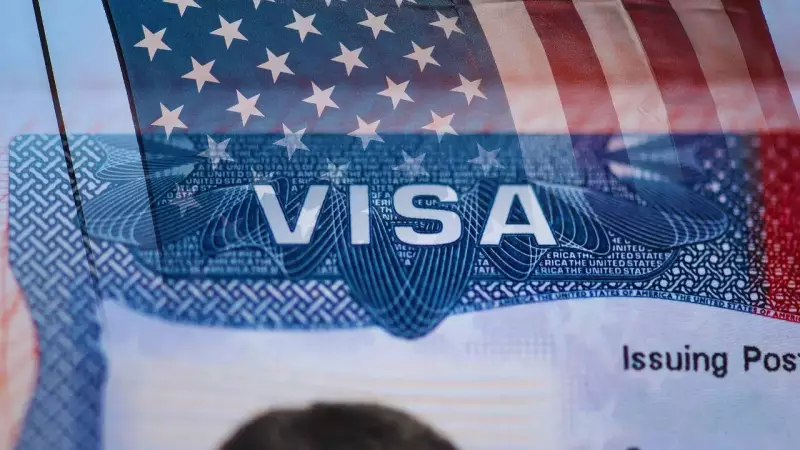
A fresh legal challenge has been mounted against a significant change in United States immigration policy affecting Indian families. The spouses of H-1B visa holders have filed a lawsuit contesting a new rule that terminates the automatic extension of Employment Authorization Documents (EADs). This development directly impacts thousands of H-4 visa holders, predominantly from India, who rely on these permits to work legally in the US.
The Core of the Legal Challenge
According to a report by Bloomberg, the lawsuit was filed recently and takes aim at an interim final rule issued by the US Department of Homeland Security on October 29, 2025. This rule dismantles the long-standing practice of automatically extending work permits for certain categories of immigrants, including H-4 visa holders, while their renewal applications are being processed. The legal complaint argues that the rule violates the Administrative Procedure Act, labeling it as "arbitrary and capricious."
The plaintiffs contend that the administration failed to establish good cause for bypassing the standard notice and public comment period before implementing the rule. "The administration’s true rationale, stripping the ability of people lawfully in the US to sustain themselves, is embarrassingly obvious," the lawsuit states. It further alleges that although a plan to end work permits for H-1B spouses entirely was not finalized, the government has "accomplished the same end by creating processing burdens, and pretextual biometric collections."

USCIS Justification and New Renewal Process
The US Citizenship and Immigration Services (USCIS) defended the policy shift in October 2025. The agency stated the intention was to enhance screening and vetting procedures. USCIS director Joseph Edlow emphasized that the move prioritizes national security over convenience for foreign nationals. "USCIS is placing a renewed emphasis on robust alien screening and vetting, eliminating policies the former administration implemented that prioritized aliens’ convenience ahead of Americans’ safety and security," Edlow said.
He described the rule as a "commonsense measure" to ensure proper vetting is completed before any employment authorization is extended, reminding all foreign nationals that "working in the United States is a privilege, not a right." Under the new framework, individuals must now proactively seek a timely renewal by filing their application properly up to 180 days before their current EAD expires. The USCIS has warned that delays in filing increase the likelihood of a temporary lapse in employment authorization.
Heightened Pressure on H-4 Visa Holders
The rule places particular strain on H-4 visa holders, who are almost exclusively the spouses of H-1B specialty occupation workers. Their path to work authorization is already contingent on their spouse's immigration progress. They become eligible for an EAD only after their H-1B spouse has initiated the process for a permanent immigrant visa (green card).
This dependency creates an even tighter timeline for H-4 holders. Their legal status and permission to work are directly tied to their spouse's status. Any gap or delay in the primary H-1B holder's paperwork can immediately jeopardize the H-4 spouse's ability to work legally, making the end of automatic extensions a source of significant financial and personal anxiety for families.
Implications and the Road Ahead
The lawsuit marks a critical pushback against a policy that could lead to widespread employment disruptions for skilled immigrant families. If the rule stands, H-4 visa holders will need to be exceptionally diligent, filing renewal applications well in advance to avoid a break in their work authorization. This adds another layer of complexity and uncertainty to their lives in the US.
The court's decision on this case will be closely watched by the large Indian diaspora and other immigrant communities. It will determine whether the new rule withstands legal scrutiny or is rolled back, restoring the safety net of automatic extensions for those awaiting visa renewals. The outcome has profound implications for family stability and the continued contribution of skilled professionals and their spouses to the US economy.






