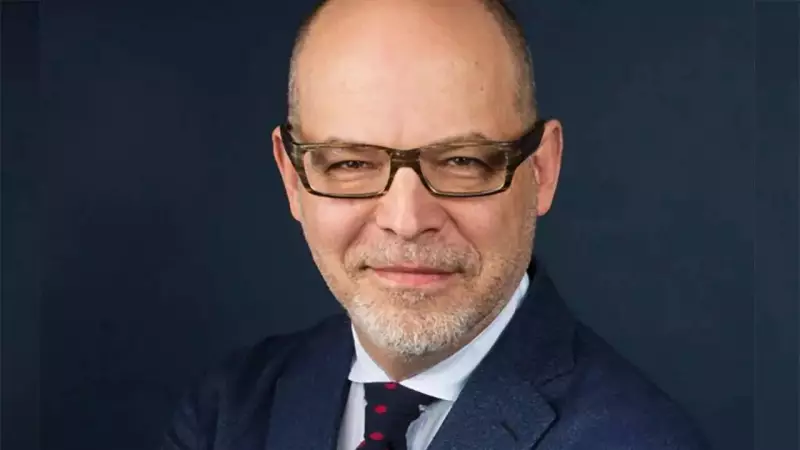
Harvard professor Fredrik Logevall has earned widespread recognition for his Pulitzer Prize-winning book, ‘Embers of War’. This powerful work details the French conflict in Vietnam and examines the lessons America failed to learn from that experience. He is currently serving as an executive producer for the Netflix adaptation of his John F. Kennedy biography. The series will feature Michael Fassbender in the role of Joe Kennedy Sr.
Contingency and American Political Culture
In a recent interview at the Jaipur Literature Festival with Tina Shashikanth, Logevall explored history's most enduring lesson, which he identifies as humility. Both ‘Embers of War’ and his JFK biography stress the concept of "contingency". This idea highlights how critical moments presented real choices for leaders.
When comparing the early 1960s to the post-9/11 period, Logevall sees both differences and similarities. "After 9/11, the threat felt immediate and acute to all Americans," he notes. "In the early 1960s, Vietnam was a slow build-up that most people ignored."

The key similarity lies in how leaders boxed themselves in during both eras. "By repeatedly declaring publicly that victory in Vietnam or Afghanistan was essential to American security, they made it politically excruciating to later change course," Logevall explains. This demonstrates how perceived domestic political pressures can powerfully drive foreign policy, especially in a geographically secure nation like the United States.
JFK's Potential Path on Vietnam
Logevall's biography details John F. Kennedy's evolution regarding Vietnam. Given evidence of Kennedy's private scepticism, a compelling question arises. If Kennedy had lived and won re-election in 1964, could he have avoided a full-scale Americanisation of the war?
"We can’t know for sure," Logevall admits, "but his doubts about a military solution were deeper than Lyndon Johnson’s." He highlights a crucial factor. Kennedy's key decision would have come during his second term, freeing him from re-election politics.
"He was also more secure," Logevall adds. "Kennedy actively encouraged dissenting voices within his administration, unlike Johnson, who demanded consensus." The change in leadership, therefore, mattered significantly.
JFK's Relevance in Today's World
Logevall's work portrays Kennedy as a complex figure—a committed Cold Warrior who was also a pragmatic internationalist. He sought engagement with the non-aligned movement. In today's era of renewed great-power competition, which aspect of his worldview remains instructive?
"His internationalism and understanding of limits," Logevall states firmly. "Kennedy grasped that American power, however great, is finite." He points to a statement from Kennedy's first year as president. In the fall of 1961, Kennedy said America cannot solve every world problem.
While opposed to Soviet communism, Kennedy showed deep interest in arms control and preventing nuclear war. "His inaugural address was, in my view, less aggressive and belligerent than often remembered," Logevall observes. This sensibility—recognising the need to engage the world, not dominate it—remains critically important today.
Repeating the French Mistake in Vietnam
In ‘Embers of War’, Logevall establishes the deep roots of the Vietnam conflict in the colonial period. American policymakers later spoke of "learning from the French mistake". What fundamental lesson did they refuse to learn?
"They refused to learn that they were repeating French mistakes," Logevall says bluntly. Studying both wars produces a strong sense of déjà vu. The problems were identical: counterinsurgency challenges, difficulty telling friend from foe, insufficient troops, and an apathetic or hostile local population.
However, Americans believed they were different. They saw themselves not as colonialists but as ‘liberators’, and considered themselves more powerful. "They failed to see that for most Vietnamese, both were large western powers imposing their will at gunpoint," Logevall concludes.
The Great Man Theory and Structural History
Focusing on a figure like John F. Kennedy changes one's view of the Cold War. Can the Great Man Theory, which suggests history is shaped by extraordinary individuals, coexist with structuralist history?

"Biography forces you to confront structure versus agency," Logevall reflects. There is an idea that world history is, at least partly, the history of decisions made by powerful people. "I believe both structure and agency matter," he asserts.
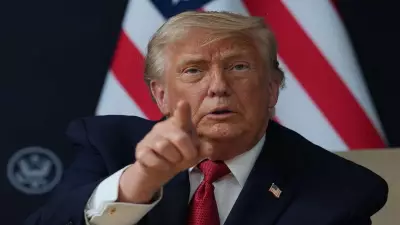
Leaders, especially American presidents during the Cold War, possessed significant agency. Their decisions genuinely shaped historical events. "Even today, Donald Trump can affect so much of what happens in the world," Logevall notes. "So, in a way, it’s a kind of affirmation of the so-called Great Man Theory of history."
Yet, these leaders also faced immense constraints, both internationally and domestically. "It is a constant question for me as a biographer—what’s the role of individual agency versus the role played by the deep state?" he says. The research for biography is similar to general history, but biography keeps the individual constantly at the centre. If the subject disappears from the narrative for too long, readers demand their return.
The Most Urgent Historical Lesson
As a historian, Logevall has worked to bridge the distance between academia and the public square. Looking at current global crises, what is the most urgent lesson from the early Cold War and Vietnam for today's policymakers?
"The most urgent thing that my reading of modern history teaches is the critical importance of considering unintended consequences," Logevall states. Leaders and ordinary people often fail to anticipate how things can go wrong.
Related to this is the necessity for empathy—the capacity to see the world through others' eyes. "I fear we are losing this," he admits. Finally, a historical sensibility brings humility. It teaches about the limits of power, the importance of working with allies and even adversaries, and what can be achieved when we understand our constraints.
"It’s both a cautionary and a hopeful message," Fredrik Logevall concludes, emphasising that humility remains history's most vital and enduring lesson for all.