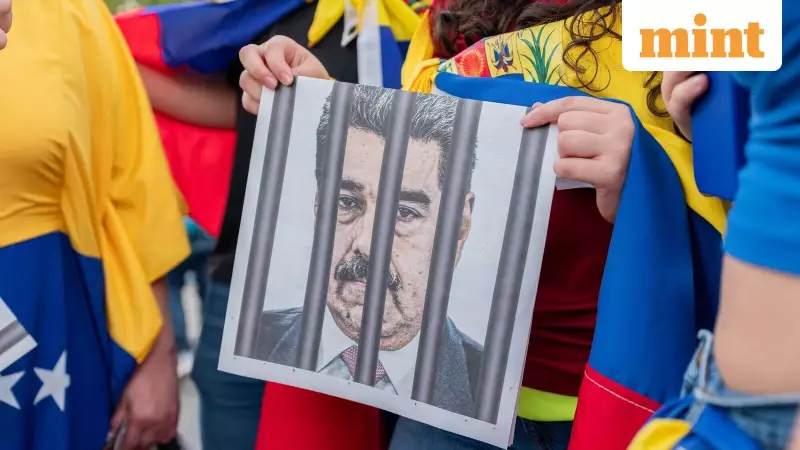
A seemingly light-hearted televised moment by Venezuelan President Nicolás Maduro may have been the final straw that triggered a direct US military intervention leading to his capture, according to a detailed report by The New York Times.
The Viral Dance Seen as Defiance
In late December 2025, US President Donald Trump privately warned Maduro to step down from power and accept exile. The Venezuelan leader reportedly rejected this ultimatum. Shortly after, tensions escalated further when the United States carried out a strike on a Venezuelan dock allegedly used for drug trafficking.
Instead of issuing a formal diplomatic response, Maduro appeared on state television in a segment that quickly went viral. He was seen dancing to loud electronic music while a remixed recording of his own speech played in English, repeating the phrase “No crazy war.” The remix was titled “No War, Yes Peace.”

US officials cited in the report interpreted this display not as a call for peace, but as a blatant sign of mockery. They believed it showed Maduro was not taking American warnings seriously and was openly dismissing the threats from Washington.
From Mockery to Military Action
The report suggests this viral moment became a significant factor in internal US deliberations. People aware of the discussions stated that Maduro's repeated public dancing and relaxed tone convinced key figures in the Trump administration that he viewed their threats as a bluff.
There was a growing concern that further delay would weaken US credibility on the global stage. The perception that Maduro was no longer deterred by American warnings created a tipping point. This led to the decision to authorise a high-risk, pre-dawn military operation.
The Dawn Raid and Its Aftermath
On Saturday, January 3, 2026, an elite US military team entered Caracas before dawn. They successfully captured President Nicolás Maduro and his wife, Cilia Flores. The couple was subsequently flown to New York, where Maduro is expected to face serious criminal charges.
The charges against him are reported to include narco-terrorism and conspiracy to import cocaine into the United States. The operation marked a dramatic escalation in the long-standing political and economic conflict between the United States and the Venezuelan government.
This sequence of events, from a private warning to a public dance and finally to a military capture, underscores how symbolic acts in international diplomacy can sometimes have unexpectedly concrete and severe consequences.