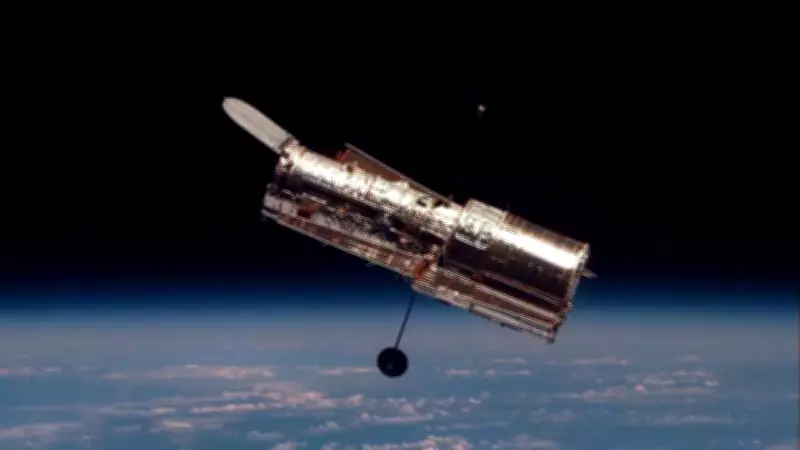
The Hubble Space Telescope's Uncertain Future: A Potential Earth Reentry by the 2030s
For over 35 years, the Hubble Space Telescope has been orbiting our planet, floating billions of miles above Earth's surface. This remarkable instrument has fundamentally transformed humanity's understanding of the universe, capturing breathtaking images of stars, galaxies, and nebulae with unprecedented clarity. Since its launch in 1990, Hubble has operated continuously, providing scientists with invaluable data about cosmic phenomena.
Aging Hardware and Atmospheric Drag Threaten Hubble's Orbit
Despite its incredible longevity, the Hubble Space Telescope cannot remain in orbit indefinitely. The harsh environment of space has taken a significant toll on its aging hardware, with atmospheric drag gradually pulling the telescope toward Earth. Recent studies indicate this descent might occur sooner than previously anticipated, with some scenarios suggesting a small possibility of casualties upon reentry.
Hubble's orbital maintenance history reveals a complex story. Originally designed to be serviced by Space Shuttle missions, the telescope received multiple orbital boosts throughout its operational life. These interventions extended its mission far beyond initial expectations. Notably, Elon Musk reportedly proposed using a Crew Dragon capsule to further elevate Hubble's orbit, though this plan appears to have been abandoned.

From Planned Retrieval to Uncontrolled Descent
The original end-of-life plan involved Space Shuttle retrieval, but the termination of the Shuttle program left Hubble without its intended support system. Consequently, the telescope now drifts slowly downward, destined to eventually encounter Earth's atmosphere. While most projections suggest it will likely fall into the ocean, there remains a minor chance debris could impact land areas.
NASA has conducted extensive simulations to predict Hubble's reentry timeline. The nominal forecast points to approximately 2033, though worst-case scenarios accelerate this to 2029, and best-case projections might extend operations until 2040. These calculations consider various factors including geomagnetic storms and solar activity that could influence the descent rate.
Safety Concerns and Debris Survival Probability
One significant complication arises from Hubble's design. The telescope was never engineered for controlled reentry, having been intended for astronaut retrieval. This means substantial debris fragments could survive atmospheric passage and reach Earth's surface.
Research indicates that while the overall risk remains low, Hubble's potential reentry doesn't fully comply with NASA's stringent safety standards. Specific regional analyses suggest concerning possibilities: debris falling over Macao might affect two to four people, while Hong Kong or Singapore could experience at least one casualty. Global probability assessments vary dramatically, from approximately 1 in 330 across Hubble's orbital regions to as low as 1 in 31,000 over the South Pacific.
The Legacy of a Scientific Icon
Despite these concerning projections, Hubble's contributions to science remain monumental. For decades, it has symbolized human curiosity and exploration, delivering discoveries that have reshaped astrophysics. The potential irony of this scientific instrument being remembered for an uncontrolled reentry over populated areas contrasts sharply with its legacy of enlightenment.
As monitoring continues, scientists emphasize that while the statistical risk is minimal, the situation warrants careful observation. The Hubble Space Telescope's eventual fate serves as a reminder of both technological achievement and the practical challenges of long-term space operations.