Prominent Indian-American voices within the United States Republican Party are actively shaping a crucial debate on national identity, forcefully rejecting the concept that "Americanness" can be graded by ancestry. This discourse gained momentum following a major conservative gathering where key figures argued for a vision of America rooted in shared values and legal immigration rather than lineage.
Ramaswamy's Fiery Speech at AmericaFest
The conversation was ignited by entrepreneur and former presidential candidate Vivek Ramaswamy during a passionate address at the Turning Point USA's AmericaFest event. Speaking to thousands of young conservatives, Ramaswamy delivered a sharp critique of what he termed "heritage Americanism." He argued that the idea of privileging Americans with colonial-era roots is nonsensical and divisive.
"The idea of a heritage American is about as loony as anything the woke left has actually put up," Ramaswamy stated, drawing a direct comparison. He used former President Donald Trump as a compelling example, noting, "It leads you to believe that Donald Trump is less of an American than Joe Biden, because Donald Trump’s mother was an immigrant." His core message was clear: the date of a family's arrival does not determine the depth of their patriotism.

Ramaswamy also took a firm stand against bigotry within political circles, particularly in light of recent offensive comments by white nationalist Nick Fuentes about Vice President JD Vance's wife, Usha Vance. "If you believe in normalizing hatred towards any ethnic group... you have no place in the future of the conservative movement," he declared, explicitly naming Indians among the groups that should be free from such attacks.
Mehek Cooke's Legal and Cultural Perspective
Echoing and amplifying Ramaswamy's sentiments, Indian-origin attorney and Republican commentator Mehek Cooke weighed in powerfully on social media platform X. As a staunch Trump supporter and legal immigrant herself, Cooke framed the issue around the pillars of law and cultural integration.
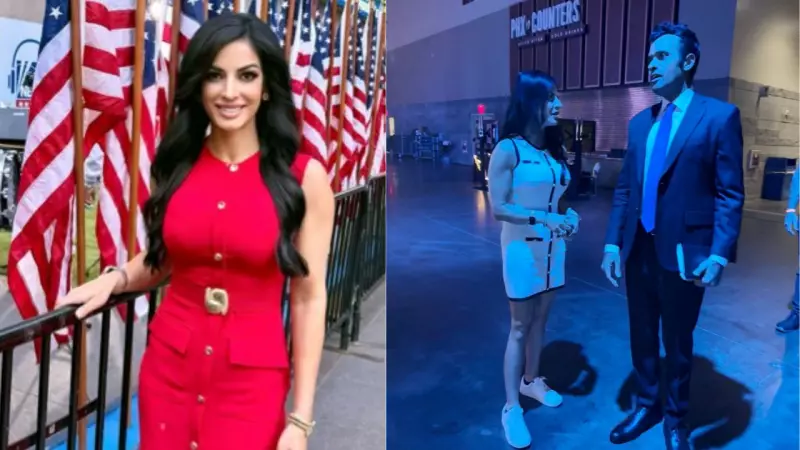
"I am American. I came here legally and assimilated, our laws, culture, and shared standards. No one gets to rank my Americanness," Cooke asserted. She pinpointed the fundamental divide not in heritage, but in "legality and assimilation." Cooke later confirmed she spoke with Ramaswamy backstage, endorsing his clarity on the subject.
Cooke's background underscores her stance. Born in India, she moved to the US as a child and grew up in Ohio. A trained lawyer, she has served in the Ohio Governor’s Office and the US Attorney’s Office. Currently, as president of American Frontier Strategies and a media surrogate, she advises the Republican National Committee on critical issues like immigration and national security.
Implications for the Conservative Movement
The united front presented by Cooke and Ramaswamy highlights a significant ideological battle within the US right-wing landscape. They are advocating for a conservative identity that is explicitly color-blind and based on conscious choice—embracing American culture and respecting its legal framework—rather than accidental birthright or ethnic origin.
This position serves as a direct counter to factions within the movement that promote racial or ethnic nationalism. By championing a vision where an Indian-American immigrant's commitment is as valid as that of a multi-generational citizen, these figures are attempting to redefine the boundaries of belonging in modern American conservatism. Their arguments place cultural unity and legal conformity above ancestry, seeking to bridge divides within the party's base while appealing to a broader, multi-ethnic electorate.