

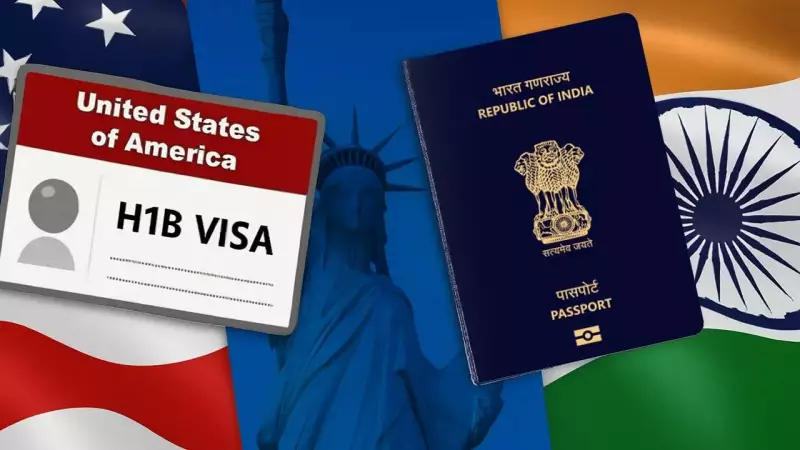
The American dream has turned into a nightmare for thousands of Indian students pursuing higher education in the United States. Former President Donald Trump's recent decision to increase H-1B visa application fees to a staggering $100,000 has created massive employment barriers, leaving many international graduates in professional limbo.
The $100,000 Barrier: How Visa Fee Hike Impacts Job Prospects
Indian students who invested heavily in US education with hopes of securing lucrative positions now face automatic rejections from companies unwilling to bear the enormous visa sponsorship costs. The Trump administration's dramatic fee increase has fundamentally altered the employment landscape for international graduates.
While the White House has specified exemptions for recent overseas graduates and certain student visa holders already in the US, the evolving guidelines have created significant uncertainty among employers regarding sponsorship expenses and procedures. This confusion has resulted in widespread hesitation to hire international candidates.

Ishaan Chauhan's experience exemplifies this crisis. After relocating from India nearly four years ago to pursue computer and data-science qualifications at the University of Wisconsin-Madison, he expected strong employment opportunities. However, as he seeks positions before his May graduation, most organizations decline to interview him upon learning about his visa sponsorship requirements.
"It doesn't matter if you went to the best university or you have the best GPA or you did the best internships, you can still fail," Chauhan told Bloomberg. "The question that always pops up is: Could you now or in the future need sponsorship? And that sort of just ends the conversation itself."
Corporate Response: Rising Reluctance to Sponsor Visas
The employment scenario has deteriorated significantly for international students. According to Handshake, a student-focused career platform, the proportion of full-time positions offering visa sponsorship has plummeted from 10.9% to just 1.9% between 2023 and 2025. The technology sector has experienced the most substantial reduction, declining to one-third of its previous year's level.
Walmart Inc., America's largest private employer, recently announced its decision to suspend job offers for candidates requiring H-1B visas. This move signals a broader trend among major corporations reassessing their hiring policies for international talent.
Kelly McSergi, who oversees employer relations at Yale University, has observed similar reluctance among recruiters. She described a recent biotech career event where a prominent organization declined student sponsorship, citing concerns about the extensive period (approximately nine months) between autumn job offers and actual commencement dates for new graduates.
The current employment landscape presents significant challenges even for US natives. The recruitment process in white-collar job sectors, including technology, has slowed down considerably, while AI-related developments have reduced junior positions. Kevin Collins from Carnegie Mellon University's Career and Professional Development Centre confirms that organizations are exercising heightened caution in their recruitment activities.
Economic Impact and Legal Challenges
The Trump administration implemented H-1B visa programme changes in September, introducing the new $100,000 application fee for companies seeking to sponsor skilled international workers. This measure becomes effective from the next lottery period. Trump indicated this fee would safeguard US employment opportunities and wages while promoting domestic recruitment.
Taylor Rogers, the White House spokesperson, provided an emailed statement explaining that this practical measure supports the 'America First' agenda by preventing system exploitation and protecting American wage levels. The statement emphasized that legitimate American businesses seeking skilled international talent would have increased certainty in their recruitment processes.

However, the US Chamber of Commerce has initiated legal proceedings against Trump's H-1B visa fee hike decision, deeming it unlawful and requesting court intervention to prevent implementation. Industry organizations have expressed concerns that this regulation could severely impact hiring practices in sectors reliant on international expertise.
Major technology corporations such as Amazon.com Inc., Microsoft Corp., and Meta Platforms Inc., which extensively utilize the H-1B visa programme, are considered particularly vulnerable to these regulatory changes.
Ironically, a recent study by Manhattan Institute researcher Daniel Di Martino reveals that Indian immigrants actually top the list of immigrant groups making net positive contributions to the US economy. Each Indian immigrant, on average, contributes to a $1.6 million reduction in US national debt over three decades while generating the highest GDP impact among all immigrant groups.
Chinese immigrants follow as the second most financially beneficial group, contributing to an $800,000 reduction in national debt over a 30-year period. These statistics challenge prevailing assumptions about immigration's economic burden on the United States.
With approximately 1.1 million international students currently enrolled in American universities according to Institute of International Education data, the implications of these policy changes extend far beyond individual career aspirations to impact the fundamental relationship between US education and global talent acquisition.





