The story of John Edward Jones's death in Utah's Nutty Putty Cave stands as one of the most chilling cave accidents in history. It is remembered not only for the horrific nature of his demise but for the desperate words and visions he shared with rescuers in his final, claustrophobic hours. This is the account of a young medical student and expectant father who realized, with terrifying clarity, that he would not survive.
The Allure and Peril of Nutty Putty Cave
Located near Pleasant Grove, Utah, Nutty Putty Cave had been a magnet for adventure seekers for decades. It was first explored in 1960 by Dale Green and his friends. The cave got its unusual name from the soft, pliable brown clay that lined many passages, similar to children's Silly Putty. Over the years, it gained fame for its incredibly tight and twisting tunnels, with intimidating sections named "The Birth Canal," "The Big Slide," "The Maze," and "The Helmet Eater."
Long before the 2009 disaster, the cave's dangers were well-known. According to reports from NBC News, rescue teams had been called to Nutty Putty at least five times in the previous decade to free trapped explorers. While those incidents ended without fatalities, safety concerns grew. Authorities temporarily closed the cave in 2006. It reopened in May 2009 under a managed permit system designed to limit access to one group at a time. This system would be tested just months later.

A Fatal Mistake and a Frantic Rescue
In November 2009, 26-year-old John Edward Jones entered Nutty Putty Cave with family members during the Thanksgiving holiday. An experienced caver and a medical student, Jones was also a husband eagerly awaiting the birth of his first child. He was searching for the notorious "Birth Canal" crawlspace.
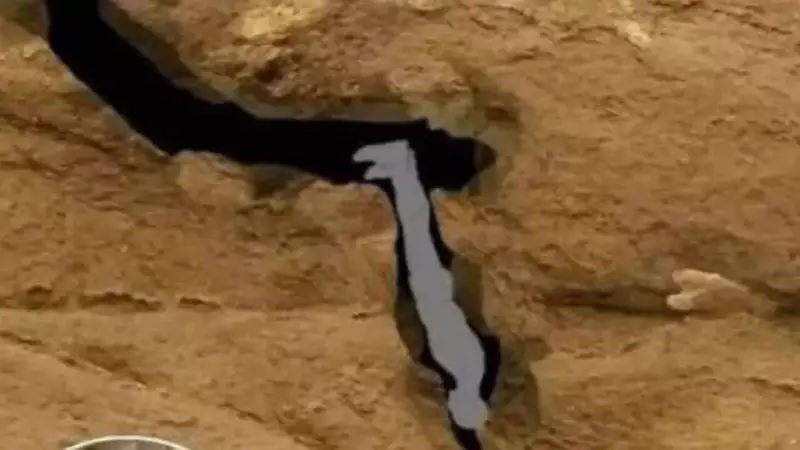
Instead, he mistakenly entered an unmapped passage near an area known as Ed's Push. Believing the space would open up, he squeezed in head-first. The opening measured a mere 10 by 18 inches. He quickly became irrevocably stuck. Wedged upside down at a steep angle, over 400 feet from the cave entrance, he could not move, turn around, or retreat.
The alarm was raised, and a massive rescue operation swung into action. Dozens of responders worked for hours, rigging a complex rope-and-pulley system to pull him free. They achieved a small victory, moving him a few inches, before the system catastrophically failed. An anchor gave way, sending Jones sliding deeper into the unforgiving crevice. A volunteer rescuer was injured when equipment snapped loose.
Even in his own dire straits, Jones's concern was for others. Accounts cited by The New York Times and The Salt Lake Tribune report him asking, "Is he OK? I think he's really hurt bad." As hope dwindled, his desperation became palpable. When volunteer rescuer Susie reached him, he greeted her with strained politeness: "Hi Susie, thanks for coming but I really, really want to get out." Soon after, panic broke through: "I'm going to die right here. I'm not going to come out of here, am I?"
Visions in the Darkness: The Final Hours
By the time seasoned cave explorer Brandon Kowallis arrived, Jones had been trapped for many agonizing hours. In an interview with the Daily Mail, Kowallis described a harrowing scene. He heard gurgling sounds as fluid began filling Jones's lungs and saw his legs spasming uncontrollably.
"He was in and out of consciousness and talking about seeing angels and demons," Kowallis recalled. A radio was eventually lowered so Jones's family could speak to him one last time. A paramedic reached him shortly after. At 11:52 p.m. on November 24, 2009, John Edward Jones was pronounced dead.
Faced with the extreme risk to would-be recoverers, officials made a grim decision. Retrieving his body was deemed impossible. Nutty Putty Cave was permanently sealed with concrete, turning it into a tomb. Jones's remains rest where he died.

The Lasting Legacy of a Tragedy
As reported by outlets like NBC News and The Atlantic, this single tragedy profoundly shifted perspectives on cave access and rescue risks across the United States. Nutty Putty Cave, once an adventurer's playground, is now a solemn memorial. It serves as a stark reminder of the fine line between exploration and peril, and of a young father who spent his final hours upside down in total darkness, fully aware of his fate.