The recent actions taken by the United States against Venezuela have ignited a complex debate in international circles. The core question revolves around whether these actions constitute an act of force, a measure of self-defence, or a legitimate law enforcement operation. The administration of former President Donald Trump has been clear in its stance, vigorously framing the move within a specific legal context.
The US Administration's Legal Stance
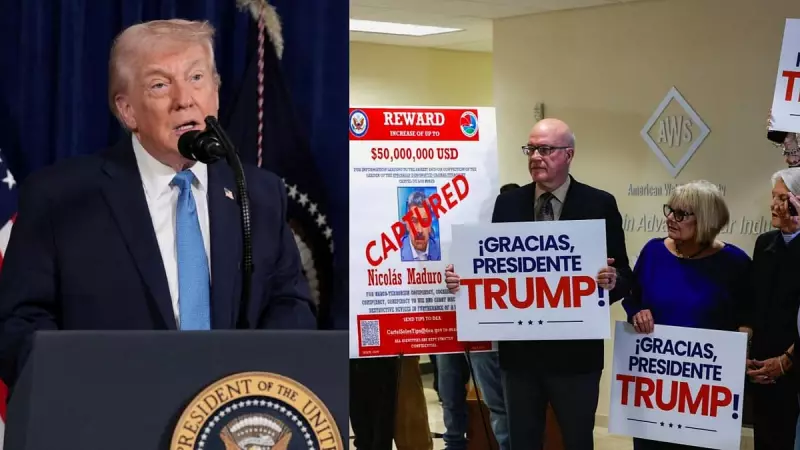
Central to the US position is the characterisation of the operation. The Trump administration has explicitly described it as a law enforcement action, not a military one. This distinction is crucial under international law. To bolster this argument, officials have pointed to the legal status of Venezuelan leader Nicolas Maduro. Maduro is labelled a fugitive wanted by US courts, thereby framing any action to apprehend him as part of a judicial process rather than an act of war or intervention.
This narrative seeks to navigate the strict prohibitions in the United Nations Charter against the use of force and intervention in the domestic affairs of sovereign states. By invoking law enforcement, the US aims to position its actions under a different, potentially more permissible, set of legal principles.

International Law's Perspective
Legal experts globally are scrutinising this claim. International law traditionally views cross-border law enforcement operations with extreme caution. Key principles come into play:
- Sovereignty: The fundamental principle of state sovereignty protects nations from external interference. An operation on Venezuelan soil without the consent of its government is a direct challenge to this.
- Use of Force: The UN Charter prohibits the threat or use of force against a state's territorial integrity. The question is whether an operation involving armed personnel, even if labelled 'enforcement', crosses this threshold.
- Jurisdiction: The extent of a nation's jurisdiction to enforce its own criminal laws abroad is limited. The US claim relies on extending its jurisdictional reach into Venezuela, a point of significant contention.
Critics argue that dressing a potentially coercive operation in the language of law enforcement does not automatically make it legal. They contend that if the operation involves elements of coercion or the threat of force on foreign territory, it may still violate international norms, regardless of its stated purpose.
Implications and Global Reaction
The outcome of this legal framing has serious consequences. If accepted by the international community, it could set a precedent for powerful states to conduct cross-border operations against individuals labelled as criminals. This could significantly erode the norms of state sovereignty. Conversely, a widespread rejection of the US argument could isolate the action as a clear violation of international law.
The global reaction has been mixed, often aligning with existing political alliances. Regional bodies and nations critical of US foreign policy have largely condemned the move as a violation of Venezuela's sovereignty. Allies of the US have been more cautious, some acknowledging the legal arguments presented by Washington. The debate continues in diplomatic corridors and international legal forums, with no immediate consensus in sight.
The events, as reported, date to January 4, 2026. This situation remains a live case study in how international law is interpreted, challenged, and applied in the modern geopolitical landscape, where the lines between policing, intervention, and warfare are increasingly blurred.