

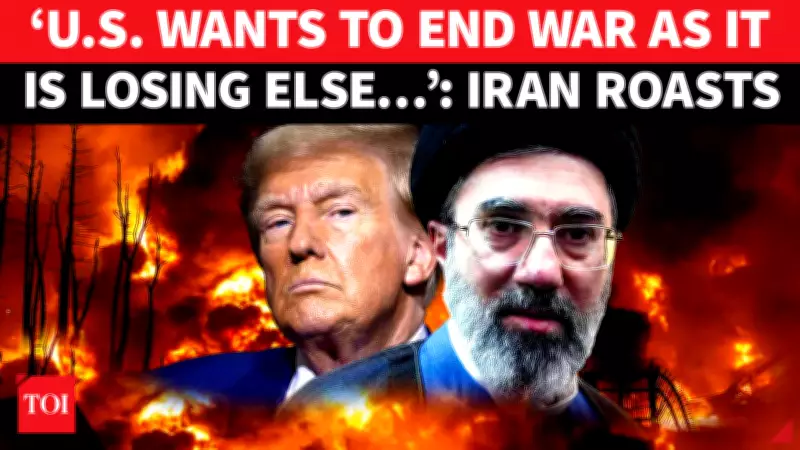
IRGC Claims Trump Administration Secretly Seeks Ceasefire After Heavy Iranian Strike Losses
War rhetoric between Iran and the United States has intensified dramatically, with both nations presenting sharply conflicting narratives about the ongoing conflict. The Islamic Revolutionary Guard Corps (IRGC) has made a bold claim that the Trump administration is quietly seeking a ceasefire following what they describe as "heavy losses" inflicted by Iranian military strikes.
Conflicting Narratives from Tehran and Washington
Ali Fadavi, the deputy commander of Iran's powerful Islamic Revolutionary Guard Corps, publicly mocked former President Donald Trump in recent statements. Fadavi asserted that Washington is secretly pursuing ceasefire negotiations while Tehran prepares what he ominously called "new surprises" for American forces. The IRGC commander's comments suggest a significant disconnect between public statements and private diplomatic efforts.
Meanwhile, Donald Trump has maintained a completely different public stance, insisting that the war is proceeding "great" for American interests. The former president claims that the United States has already inflicted massive damage inside Iranian territory through counter-strikes and covert operations. This contradictory messaging creates confusion about the actual state of military engagements between the two nations.

Regional Players and Global Implications
Israeli officials, including prominent figures like Israel Katz, have declared that their military operations will continue without any predetermined time limit. This adds another layer of complexity to the regional conflict, as Israel maintains its own strategic interests separate from American objectives in the region.
The escalating tensions around the strategically vital Strait of Hormuz have raised serious concerns about global energy security. As one of the world's most important oil transit chokepoints, any disruption to shipping through the strait could have immediate and severe consequences for international energy markets and global economic stability.
Broader Context of Regional Conflict
The current claims and counterclaims emerge against a backdrop of increasing military engagements across the Middle East. Recent reports have detailed multiple strikes and counter-strikes involving Iranian, American, and Israeli forces throughout the region. These include attacks on strategic locations such as military bases, economic hubs, and critical infrastructure.
The situation represents one of the most serious escalations in US-Iran relations in recent years, with both sides demonstrating willingness to engage in direct military confrontation. The conflicting narratives from Tehran and Washington suggest that diplomatic channels remain active even as public rhetoric grows increasingly hostile.
As the situation continues to develop, international observers are closely monitoring for any signs of de-escalation or further military escalation that could potentially draw additional regional and global powers into the conflict.






