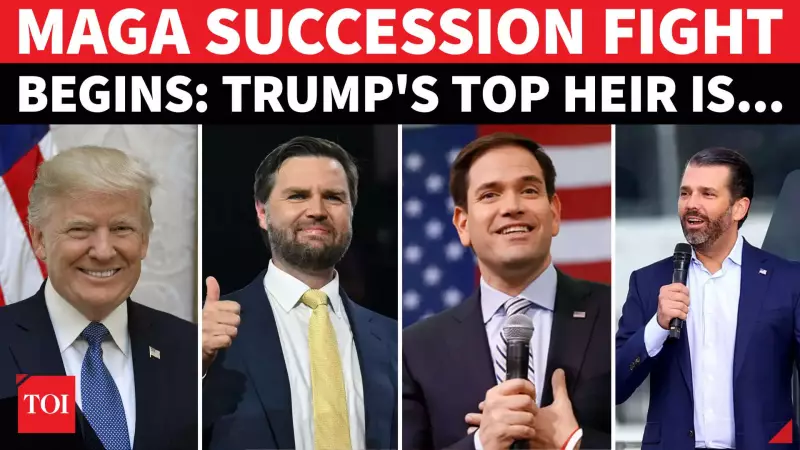
The battle to lead the Republican Party after Donald Trump is already intensifying behind the scenes, with Vice President J.D. Vance emerging as a powerful early contender. A significant endorsement has thrust him into the spotlight, even as internal divisions over ideology and legacy begin to surface within the conservative movement.
Vance Takes Early Lead in 2028 GOP Succession Race
The race for the 2028 Republican nomination is heating up much earlier than anticipated. A major boost for Vice President J.D. Vance came with a key early endorsement from Erika Kirk, the CEO of Turning Point USA. This move has firmly positioned Vance as a potential front-runner in the eyes of many activists.
Although Vance has not officially declared his candidacy and maintains that his current focus is on defending GOP majorities in the upcoming midterm elections, early indicators suggest strong support. Recent polling and informal straw votes reveal that he is already leading the pack of potential candidates.

MAGA Movement Faces Internal Tensions and Rivalries
Beneath the surface of this early jockeying for position, significant MAGA infighting is becoming visible. The conservative movement is grappling with internal debates on core issues like the boundaries of free speech and the association with controversial figures. The central, unresolved question is: who is the rightful heir to Donald Trump's political legacy?
This brewing conflict is not happening in a vacuum. A host of other prominent Republicans are closely watching and likely preparing their own bids. The field includes seasoned senators like Marco Rubio and Ted Cruz, as well as former presidential candidate Ron DeSantis. Perhaps most notably, Donald Trump Jr. is also seen as a figure circling the succession battle, adding a dynastic layer to the contest.
An Early Battle for the Soul of the GOP
The struggle to define the future of the Republican Party appears to be underway far ahead of the next presidential election cycle. The endorsement for Vance and the subsequent discussions highlight the early formation of factions. This infighting suggests that the path to becoming the Trump successor will be highly competitive and could expose deep ideological rifts within the MAGA coalition.
The coming months will be critical in observing how these potential candidates navigate their current roles while subtly campaigning for 2028. The internal debates on policy and personality will ultimately shape the platform and direction of the GOP as it looks to a post-Trump era, making this early maneuvering more than just political gossip—it's a preview of a high-stakes ideological war.