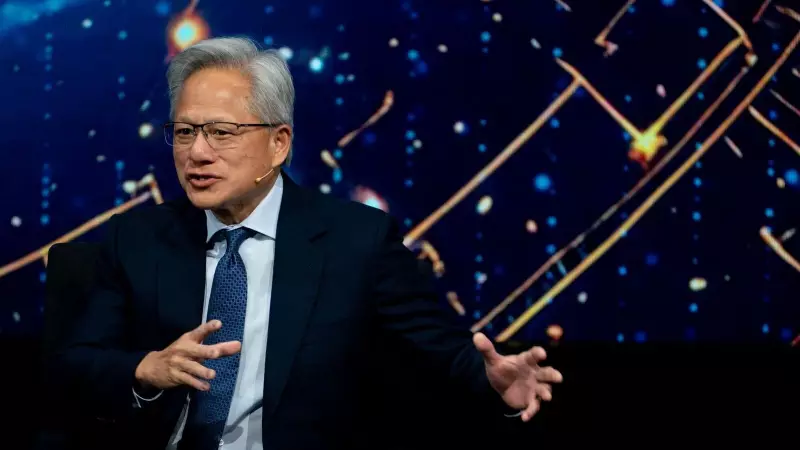
In a powerful statement challenging conventional wisdom, Nvidia's CEO Jensen Huang has declared that an Ivy League education is not a prerequisite for achieving success in the United States. The tech billionaire, who himself immigrated to America, shared his perspective on the iconic "American dream" during a recent podcast appearance, sparking a wider conversation about the value of elite degrees.
Huang's Immigrant Journey and Belief in Meritocracy
Speaking on The Joe Rogan Experience podcast, Jensen Huang recounted his family's humble beginnings. He revealed that his parents sent him and his brother ahead to the United States from Thailand, joining them two years later with little more than their suitcases. "My parents left everything behind," Huang stated, emphasizing their pursuit of opportunity in their 40s. He proudly identifies as a product of that journey, calling himself "the first generation of the American dream."
Drawing directly from his life, Huang argued that the path to prosperity is built on effort and resilience, not prestigious diplomas. "You don't have to go to Ivy League schools to succeed. This country creates and has opportunities for all of us," he told Rogan. He acknowledged the struggle, noting, "You do have to strive. You do have to claw your way here." However, he concluded that with dedication, fortunate circumstances, sound judgment, and the support of others, success is attainable for anyone.

A Growing Chorus Questioning Higher Education's Value
Jensen Huang's comments, made public on 4 December 2025, arrive amid a significant debate about the relevance of traditional college degrees. He is not alone among tech leaders in voicing skepticism. Zoho Corporation founder Sridhar Vembu has actively warned Indian parents against burdening their children with heavy student debt.
Vembu pointed to a cultural shift in America where forward-thinking employers are hiring skilled individuals without college credentials. He urged Indian families to pay attention to this trend, which he believes empowers youth to stand on their own feet without financial chains. "This trend will change the way they view the world and it will change culture and politics," Vembu asserted in a social media post.
Elon Musk and Alex Karp Weigh In
The conversation extends to other prominent figures. Palantir CEO Alex Karp suggested earlier in November that college degrees might become "useless" in the age of artificial intelligence, controversially stating that smart graduates with generalized knowledge are at a disadvantage.
Meanwhile, Elon Musk offered a nuanced take during an appearance on Zerodha founder Nikhil Kamath's WTF podcast. While agreeing that specific degree skills may not keep pace with AI, Musk validated the social experience of college. He mentioned his own children's desire to attend and said, "If you want to go to college for social reasons... to be around people your own age in a learning environment," it remains a valid choice. He advocated for learning across a wide range of subjects if one chooses to go.
The Core Message: Hard Work Over Pedigree
The central theme from Jensen Huang's narrative is a reaffirmation of core American ideals—meritocracy, grit, and opportunity. His story serves as a potent example that success can be built from the ground up. While not dismissing education outright, Huang and other tech pioneers are highlighting alternative pathways in a rapidly evolving job market, especially in technology and innovation-driven fields.
This growing discourse signals a potential re-evaluation of how success is defined and achieved, moving the focus from institutional prestige to individual capability, determination, and practical skill-building.