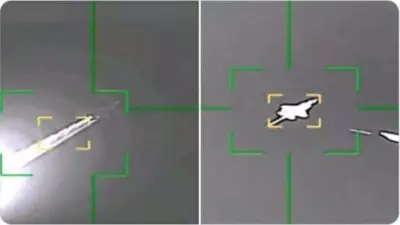
A commercial JetBlue flight and a United States Air Force refueling tanker had a terrifyingly close call in the skies over New York, narrowly avoiding a potential mid-air collision. The incident, which occurred on a recent Thursday, has prompted an immediate investigation by the Federal Aviation Administration (FAA).
The Heart-Stopping Incident Over Syracuse
The drama unfolded in the airspace near Syracuse Hancock International Airport in New York. According to flight tracking data and preliminary reports, a JetBlue Airbus A321, operating as flight 206 from Boston to Orlando, and a US Air Force Boeing KC-135 Stratotanker came within an alarmingly short distance of each other. The KC-135 is a large military aircraft used for aerial refueling, making the potential consequences of a collision catastrophic.
Initial information suggests the two aircraft were on converging paths. The proximity was so severe that it triggered automated collision avoidance systems onboard the planes. These systems, known as the Traffic Collision Avoidance System (TCAS), issued urgent resolution advisories to the pilots, instructing them to take immediate evasive action. It was this last-second maneuver that averted disaster.

FAA Launches Urgent Probe
In response to the serious incident, the Federal Aviation Administration (FAA) has confirmed it is investigating the near-miss. The agency's standard procedure in such cases involves gathering data from air traffic control recordings, radar information, and statements from the flight crews involved. The primary goal is to determine the sequence of events, identify any potential errors in communication or air traffic control instructions, and implement measures to prevent a recurrence.
"The FAA is investigating an incident in which a JetBlue flight and a U.S. Air Force aircraft came close to each other near Syracuse, N.Y., on Thursday," an agency spokesperson stated. The investigation will scrutinize the actions of all parties, including the pilots and air traffic controllers managing the busy northeastern air corridor.
Safety Protocols and Industry Implications
This incident highlights the critical importance of layered safety systems in modern aviation. While air traffic control provides primary separation, onboard TCAS technology acts as a vital final backup. The successful avoidance of a collision in this case demonstrates these systems working as intended under extreme pressure, but it also raises questions about how the two aircraft got so close in the first place.
Near-misses, while rare, are taken with the utmost seriousness by aviation authorities worldwide. Each event is thoroughly dissected to enhance training, update procedures, and improve technology. The findings from this FAA probe will likely be shared with airlines and military aviation units to reinforce safety protocols.
For passengers, such events are a stark reminder of the complex, high-stakes environment of air travel. Fortunately, in this instance, the robust safety infrastructure in place prevented what could have been a tragic accident. The investigation continues as officials work to piece together the final moments before the evasive maneuver.