

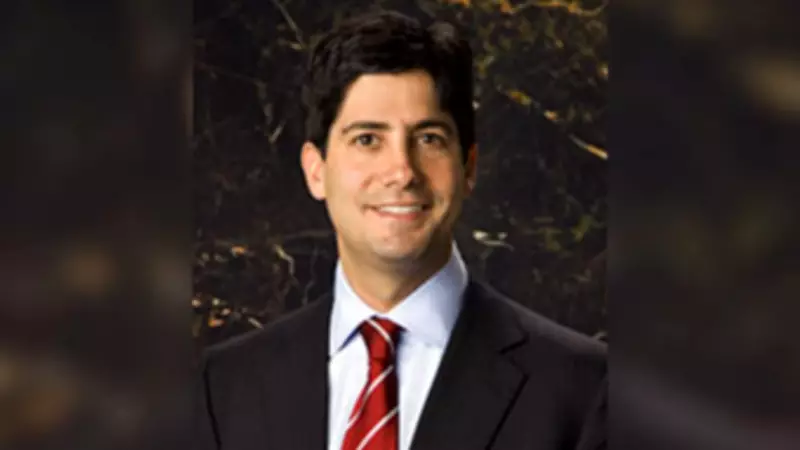
Kevin Warsh: Trump's Nominee for US Federal Reserve Chair
US President Donald Trump announced on Friday that he will nominate former Federal Reserve governor Kevin Warsh as the next chair of the US central bank. This decision shifts attention to the future direction of the Federal Reserve and its evolving relationship with the White House. Warsh, aged 55, is set to replace Jerome Powell when his term concludes in May 2026, marking a significant change in leadership at a critical time for monetary policy.
Background and Nomination Context
Kevin Warsh served on the Federal Reserve's board from 2006 to 2011, a period that included the tumultuous global financial crisis. His nomination follows months of public criticism from President Trump, who has repeatedly faulted current chair Jerome Powell for not reducing interest rates swiftly enough. Appointed by Trump in 2017, Powell has faced ongoing pressure, and Warsh's selection underscores the president's desire for a shift in Fed leadership. The nomination requires confirmation by the Senate, adding a layer of political scrutiny to the process.
Five Essential Insights into Kevin Warsh
1. Youngest Member of the Federal Reserve Board
Kevin Warsh joined the Federal Reserve's governing board in 2006 at the age of 35, making him the youngest governor in the institution's history. He completed a full term that lasted until 2011. His tenure encompassed pivotal moments, including the buildup to the global financial crisis, the collapse of major US financial institutions, and the initial phases of economic recovery. This experience provided him with a deep understanding of crisis management and monetary policy during unstable times.

2. Key Role During the Financial Crisis
During the financial crisis and the subsequent Great Recession, Warsh worked closely with then Fed chair Ben Bernanke. Bernanke later acknowledged that Warsh served as one of his closest advisers, playing a crucial role in the central bank's efforts to stabilise financial markets and support the economy. His involvement in high-stakes decisions during this period highlights his expertise in navigating economic turmoil.
3. Opposition to Low-Interest-Rate Policies
While on the board, Warsh expressed opposition to several low-interest-rate measures implemented during and after the crisis. In internal discussions, he warned that aggressive rate cuts and other stimulus actions could lead to higher inflation, even though inflation remained subdued for years following the recession. This stance reflected his cautious approach to monetary easing and concern over long-term economic stability.
4. Changed Stance in Recent Years
In more recent times, Warsh has shifted his position, advocating in speeches and opinion columns for the Federal Reserve to support lower interest rates. In a January 2025 column for The Wall Street Journal, he argued that deregulation and reductions in government spending would alleviate inflationary pressures, thereby creating room for the Fed to lower rates. This evolution in his views suggests a pragmatic adaptation to changing economic conditions.
5. Critic of the Current Federal Reserve
Kevin Warsh has emerged as a vocal critic of the Federal Reserve under Jerome Powell's leadership. He has called for a "regime change" at the central bank, accusing it of overstepping its mandate by engaging in issues such as climate change and diversity, equity, and inclusion. Additionally, he has pointed to what he describes as a major policy mistake: allowing inflation to surge sharply between 2021 and 2022. His critiques signal a potential shift in Fed priorities if he is confirmed as chair.
Implications and Future Outlook
The nomination of Kevin Warsh brings his record and policy perspectives into sharp focus, with implications for US monetary policy and global economic stability. As the Senate considers his confirmation, stakeholders will closely watch how his past experiences and current views might influence the Federal Reserve's approach to interest rates, inflation, and regulatory matters. This development underscores the ongoing interplay between political leadership and central banking in shaping economic trajectories.






